

If you are planning a new deck, one of the first big questions is stressful but straightforward. What should you actually build the deck with?
Friends recommend composite, neighbors still swear by pressure-treated wood, and then there is PVC, which sounds high-end but is also more expensive. The right choice affects how your deck looks, how much time you spend maintaining it, and how long it will last before you need to replace it.
This guide breaks down wood, composite, and PVC in clear, practical terms so you can decide what to build your deck with, based on budget, maintenance preferences, and how you really live outside.
Oak City Hardscapes designs and builds custom decks and outdoor living spaces in and around Raleigh, so this article also highlights how each material performs in a warm, humid climate.
How To Decide What To Build Your Deck With
Before you pick a material, it helps to clarify a few key points.
Ask yourself:
- How long do I want this deck to last before major repairs or replacement?
- Am I willing to stain and seal wood every year or two, or do I prefer simple cleaning?
- Is the upfront cost my main concern, or the total cost over 10 to 20 years?
- Is a natural wood look essential, or am I open to engineered materials that just look like wood?
- Will the deck be in full sun, partial shade, or a mix, and how humid or wet is my yard?
Your answers will push you toward one of three options.
- Wood is usually best for lower upfront cost and a natural look, if you are willing to maintain it.
- Composite is a strong middle ground with low maintenance and long life.
- PVC is a premium choice with very low maintenance, excellent moisture resistance, and a higher initial price.
The rest of this article explains how each one works in real life so you can confidently choose what to build your deck with.
Your Main Decking Options At A Glance
Most residential decks today are built with:
- Pressure-treated wood or other natural wood species
- Composite decking made from wood fibers and plastics
- PVC decking, sometimes called vinyl or polymer decking
Wood
Traditional option, usually pressure-treated pine, cedar, or hardwoods. It offers a warm, natural look but needs regular sealing or staining and can be more vulnerable to moisture and insects.
Composite
Composite lumber blends wood fibers with plastic and binding agents to create a dense, durable material. It resists rot, many insects, and general weathering better than standard wood and does not need to be painted or stained.
PVC
PVC decking is made entirely from plastic, typically polyvinyl chloride. It offers high resistance to moisture, fading, and staining, and is often the lightest and most low-maintenance of the three.

Wood Decking: Classic Look, Higher Maintenance
Wood is often the first thing homeowners think of when they picture a deck. It is familiar, warm underfoot, and can be an excellent choice when installed and maintained correctly.
Types Of Wood Commonly Used
- Pressure-treated pine or similar softwoods
- Cedar or redwood in some markets
- Tropical hardwoods, such as ipe, are used in higher-budget projects
Advantages Of Wood Decking
- Pleasing, natural aesthetic that many people associate with a traditional deck
- Authentic and one-of-a-kind wood character in every board
- Short-term cost efficiency, with one of the lowest upfront material costs
- Can be customized with different stains or paint colors over time
Disadvantages Of Wood Decking
- High maintenance requirements, including regular cleaning and inspections.
- Higher risk of mold and mildew in warm, humid climates if the wood is not protected.
- Luster can fade in as little as six months when exposed to the sun and weather.
- May require staining or sealing every one to three years.
- Replacement in 10 to 15 years is common, especially with basic pressure-treated lumber.
When Wood Makes Sense
Wood can be a good choice if you:
- Need the lowest possible upfront cost
- Love the authentic look and feel of natural lumber
- Are comfortable with regular maintenance and inspections
- Do not mind planning for repairs or board replacement in the future
Composite Decking: Low Maintenance, Modern Performance
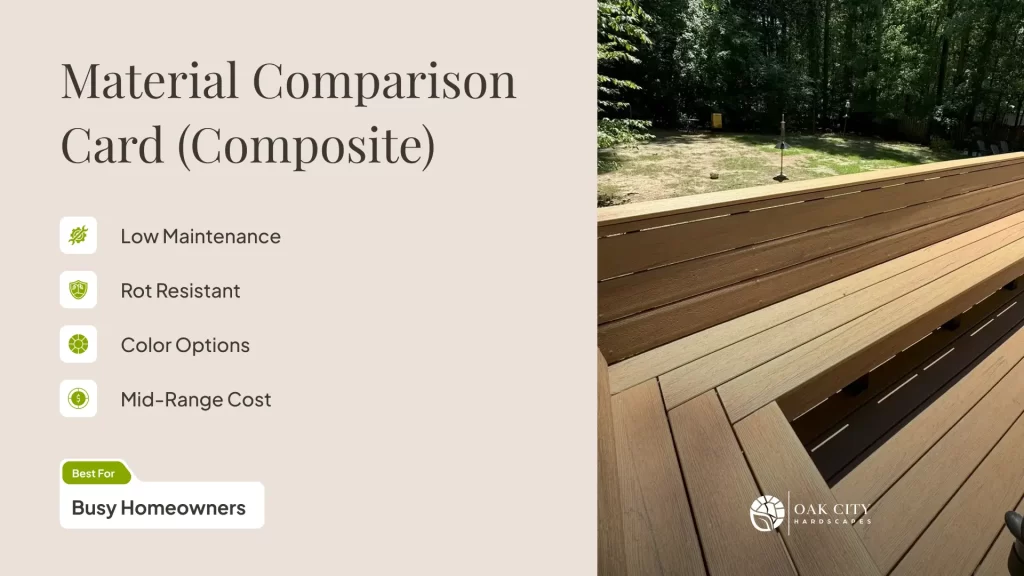
Composite decking has become one of the most popular choices for building a deck, especially for busy homeowners who want less maintenance.
Composite boards are made from a blend of wood fibers and plastic with added binders and pigments. Many products now include a cap or shell that improves stain and fade resistance.
Advantages Of Composite Decking
- Low-maintenance alternative to treated lumber.
- Authentic, wood-like appearance with realistic grain patterns.
- Color-rich boards that are designed for little to no noticeable fading.
- Moisture-, rot-, and weather-resistant, ideal for humid conditions.
- No sanding, sealing, or staining needed to keep the surface protected.
- Warranties from many manufacturers often range from about 20 to 30 years.
- Over the life of the deck, reduced maintenance and fewer replacements can lead to meaningful long-term cost savings compared to basic wood.
Disadvantages Of Composite Decking
- The upfront investment may be 20 percent or more than for basic pressure-treated pine.
- Some boards can become warm in direct, all-day sun.
- Lower-quality or uncapped composites can still be more prone to staining and fading over time.
- The appearance is very close to wood but not identical, which some homeowners notice.
When Composite Makes Sense
Composite is a strong option if you:
- Want a deck that mainly needs simple washing to stay looking good
- Plan to stay in your home long enough to benefit from a longer lifespan
- Prefer a consistent look without refinishing every few years
- Are you comfortable with a midrange price between bare wood and premium PVC
PVC Decking: Premium, Lightweight, Very Low Maintenance
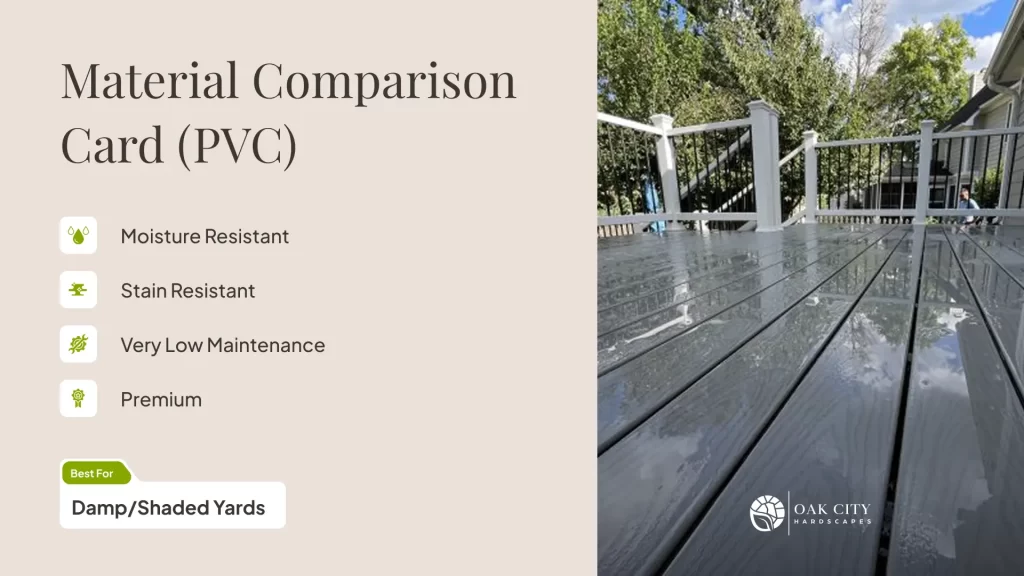
PVC, also called vinyl or polymer decking, is made entirely from plastic, not wood fibers. It is often the top answer for homeowners who ask what to use for their deck if they want the least maintenance and the highest moisture resistance.
Advantages Of PVC Decking
- Very low-maintenance alternative to treated lumber.
- Authentic wood-like appearance in many modern product lines.
- Color-rich boards that hold their color with minimal fading over time.
- Exceptional resistance to moisture, rot, mold, and mildew.
- No sanding, sealing, or staining required at any point.
- Many products carry longer warranties, often reaching 30 to 50 years.
- Over the long term, the combination of durability and reduced maintenance can create significant cost savings compared to multiple wood replacements.
Disadvantages Of PVC Decking
- Usually, the highest upfront cost of the three primary materials.
- May expand and contract more with temperature changes than some composites.
- Some homeowners still prefer the slightly softer look of composites or real wood.
When PVC Makes Sense
PVC may be your best option if you:
- Want the least maintenance decking with simple cleaning
- Have a very damp or shaded yard where moisture is a constant challenge
- Plan to use the deck frequently and want strong stain and scratch resistance
- Are comfortable investing more upfront for long-term performance
Wood vs. Composite vs. PVC: Side-By-Side Comparison
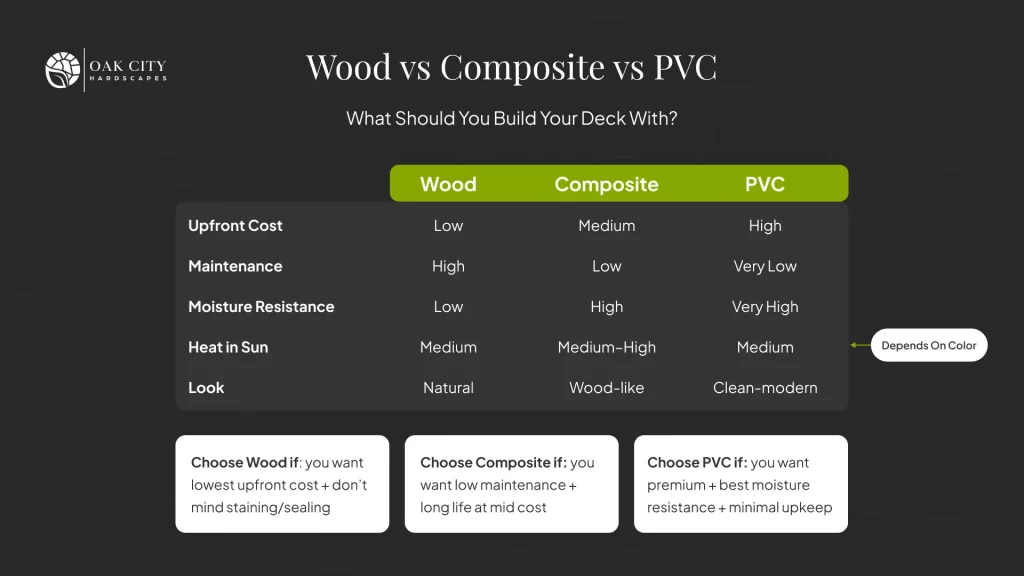
Use this table as a quick reference when deciding what to build your deck with. Values are general tendencies and can vary by product and installer.
| Factor | Wood | Composite | PVC |
| Upfront Cost | Usually lowest | Midrange | Usually highest |
| Maintenance | Regular staining and sealing | Occasional washing | Occasional washing |
| Lifespan | About 10 to 20 years or more with excellent care | About 25 to 30 years in many cases | Often 30 years or more, depending onthe product |
| Moisture Resistance | Low to medium | High | Very high |
| Look And Feel | Natural wood grain | Wood-like, consistent appearance | Refined, often more modern look |
| Environmental Impact | Renewable material, but can require treatments and logging | Often contains recycled plastics and wood fibers | Sometimes includes recycled plastic, fully synthetic |
This comparison also shows why many homeowners choose composite or PVC when they look beyond the initial price and consider total cost, time, and enjoyment over the life of the deck.
How Climate And Lifestyle Affect Your Choice
In a warm, humid climate like the Raleigh area, moisture, sun, and seasonal temperature swings can be tough on outdoor surfaces. That makes material choice even more important when you decide what to build your deck with.
Climate Considerations
- Humidity and rainfall increase the risk of rot, mold, and mildew on unprotected wood.
- Intense sun can fade stains and paints, and may heat darker deck surfaces.
- Seasonal swings can cause expansion and contraction in all materials
Wood can perform well with diligent maintenance, but composite and PVC were engineered to reduce many of these issues. That is part of why they have become popular alternatives to traditional lumber in outdoor spaces.
Lifestyle Considerations
Think about how you plan to use your deck.
- If you host gatherings regularly, low-maintenance materials reduce your to-do list before every event.
- If you have pets and kids, consider scratch- and stain-resistant surfaces in high-traffic food and drink areas.
- If you prefer a more natural or rustic style, wood or wood-look composite may fit best.
Your day-to-day life outside will often tell you more than a price sheet about what you should build your deck with.
Design Considerations Beyond The Deck Boards
When you plan a new deck, the surface material is only one part of the design. You also want to think about how the deck connects to the rest of your outdoor living space.
For example, Oak City Hardscapes often ties decks into:
- Screened in porches for bug-free relaxation
- Paver patios and walkways that extend living areas on the ground level
- Retaining walls that create level spaces on sloped yards
Thinking through the whole layout helps you choose the right deck material that matches the overall look and performance of your outdoor space.
A Simple Decision Guide For Homeowners
If you are still unsure what to build your deck with, walk through these quick scenarios.
Choose Wood If
- You want the lowest upfront cost
- You enjoy DIY projects and do not mind regular maintenance
- You prefer the character of real wood and are comfortable with aging and refinishing
Choose Composite If
- You want a long-lasting deck without yearly staining
- You like the look of wood but want better resistance to moisture and insects
- You are willing to invest a bit more upfront for lower lifetime maintenance
Choose PVC If
- You want the lowest maintenance option available
- Your yard tends to stay damp or shaded, or you are near water features
- You are designing a high-end outdoor space and want a very clean, uniform finish
If you still have questions, a professional deck contractor can review your yard and home and how you plan to use the space, then recommend the best match for your situation.
Working With A Professional Deck Builder In Raleigh
Choosing the right material is just one step. Proper design, framing, and installation are crucial for safety, longevity, and appearance.
A professional deck builder will:
- Evaluate your existing structure if you are replacing an older deck
- Confirm local code requirements and permitting
- Recommend appropriate framing and fasteners for wood, composite, or PVC
- Plan details like stairs, railings, lighting, and transitions to patios or porches
Oak City Hardscapes specializes in creating custom outdoor living spaces, including decks, patios, and more, across the Raleigh area. You can learn more about the team’s outdoor living services and explore recent projects in the portfolio section of the site.
If you know you want a deck but are not sure what to build it with, this is exactly the kind of conversation a local specialist can walk you through.
Frequently Asked Questions
1. What Is The Best Material To Build A Deck With Overall
There is no single best material for every home. Many homeowners choose composite as a balanced option that offers a long lifespan and low maintenance at a midrange cost. PVC can be ideal for very wet or high-end projects, while wood can be the right choice when budget and a natural look are the top priorities.
2. Is Composite Decking Worth The Extra Cost
For many people, yes. Composite decking typically costs more upfront than pressure-treated wood but lasts longer and requires less maintenance. Over ten to twenty years, the total cost of ownership can be similar to or even lower than that of wood, especially when you factor in reduced maintenance time and materials.
3. How Long Do Composite And PVC Decks Last
Composite decks commonly last around twenty-five to thirty years, sometimes longer when installed and cared for correctly. PVC and other polymer-based decks can last thirty years or more, depending on the specific product and climate.
4. Do Composite Or PVC Decks Look Like Real Wood
Many modern composite and PVC products feature wood-like grain patterns and color variation. While they are not identical to real wood up close, high-quality products now create a very convincing appearance that blends well with most home styles and landscapes.
5. Can I Replace Wood Deck Boards With Composite Or PVC On An Existing Frame
In many cases, yes, as long as the existing structure is in good condition and meets spacing and load requirements for the new material. A professional should inspect the framing, footing size, and joist spacing before proceeding.
6. What Is The Easiest Deck Material To Maintain
Composite and PVC decking are both much easier to maintain than traditional wood. Most of the time, you only need routine cleaning with a mild soap solution and a soft brush or low-pressure rinse. There is no need for regular staining, sealing, or painting.
7. Which Decking Material Is Most Eco-Friendly
The answer depends on how you define eco-friendly. Responsibly sourced wood is renewable and has a relatively low carbon footprint. Composite and some PVC products use recycled plastic and wood fibers, reducing waste and extending the useful life of materials that would otherwise be discarded.
Conclusion And Key Takeaways
Choosing what to build your deck with is one of the most important decisions you will make for your outdoor living space.
Wood offers tradition and a natural look, but requires your time and attention for regular maintenance. Composite brings together the appearance of wood with improved durability and low maintenance. PVC takes low maintenance even further with excellent moisture, stain, and fade resistance at a higher upfront price.
When you step back and look at your budget, your lifestyle, and the climate around Raleigh, the right choice becomes clearer.
Key takeaways:
- Think about lifespan and maintenance, not just initial price, when choosing what to build your deck with
- Wood can be ideal for lower budgets and a natural look, as long as you accept regular staining and sealing.
- Composite offers a strong balance of cost, durability, and simple cleaning, which works well for many busy households.
- PVC is a premium, very low-maintenance option that shines in wet or high-use environments
- Local climate, sun exposure, and your overall outdoor design should all influence your choice.
- A professional deck contractor can help you match material, structure, and design so your deck looks great and lasts.