
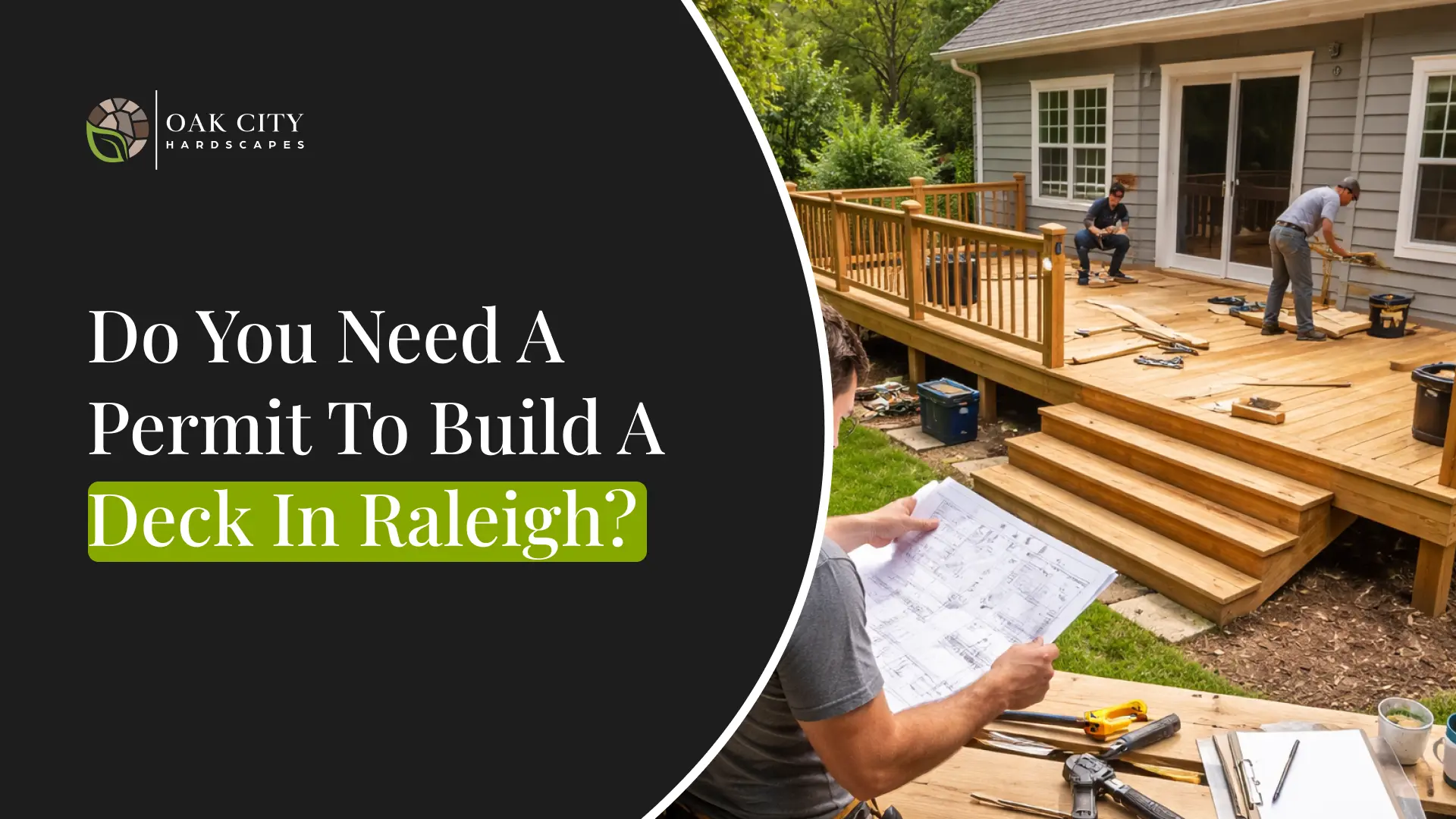
You finally have the plan. A new deck, better flow to the backyard, maybe composite boards, maybe a set of wide stairs down to a patio. Then someone says, “Did you pull a permit?” and suddenly the project feels more complicated than it needs to be.
Here is the clear answer, plus the exact steps Raleigh typically expects, so you can move forward without delays, rework, or inspection headaches.
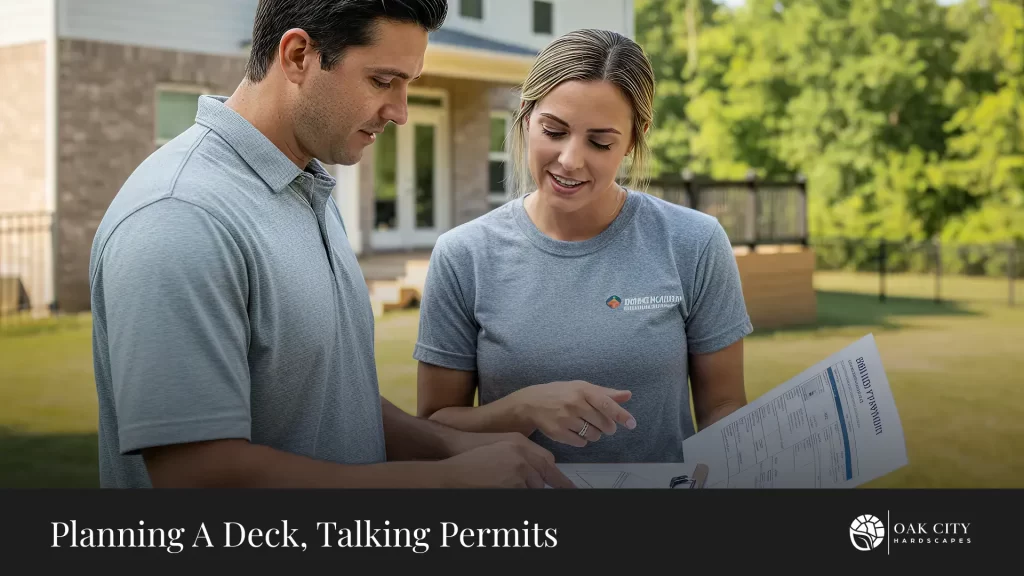
The Short Answer: In Raleigh, Plan On Pulling A Permit
If you are building a deck in Raleigh, you should plan to obtain a permit before construction begins. The City of Raleigh’s own deck guidance is direct about it, and it explains the purpose: permitting and inspections help ensure the deck complies with zoning setbacks and the North Carolina Residential Building Code.
Raleigh also provides a specific permit process page for screened porches, decks, and balconies, including the required documents and instructions for submitting through the Permit and Development Portal.
What Counts As “Building A Deck” Versus “Repairing A Deck”
This is where much of the confusion comes from, especially when homeowners are replacing an old deck.
Building Or Rebuilding Usually Means Permit
If you are adding a new deck, changing the footprint, altering the structure, adding stairs, changing the height, adding a roof cover, or rebuilding the framing, treat it as a permitted project. Decks are structural, load-bearing work in the real world, even if the deck feels “simple.”
Some Limited Repairs May Be Exempt Under State Guidance
North Carolina’s Office of the State Fire Marshal has guidance on permit exceptions that specifically addresses decks. In short, it explains that deck additions, repairs, or replacements are not exempt, but certain repair or replacement work, such as deck floorboards (decking) and some guardrail or stair tread replacements, may be exempt when the project cost is $40,000 or less. Always confirm with your local office before relying on an exemption.
Practical takeaway: if the work touches structure, footings, ledger attachment, framing, stairs, or changes the deck footprint, expect to need a permit.
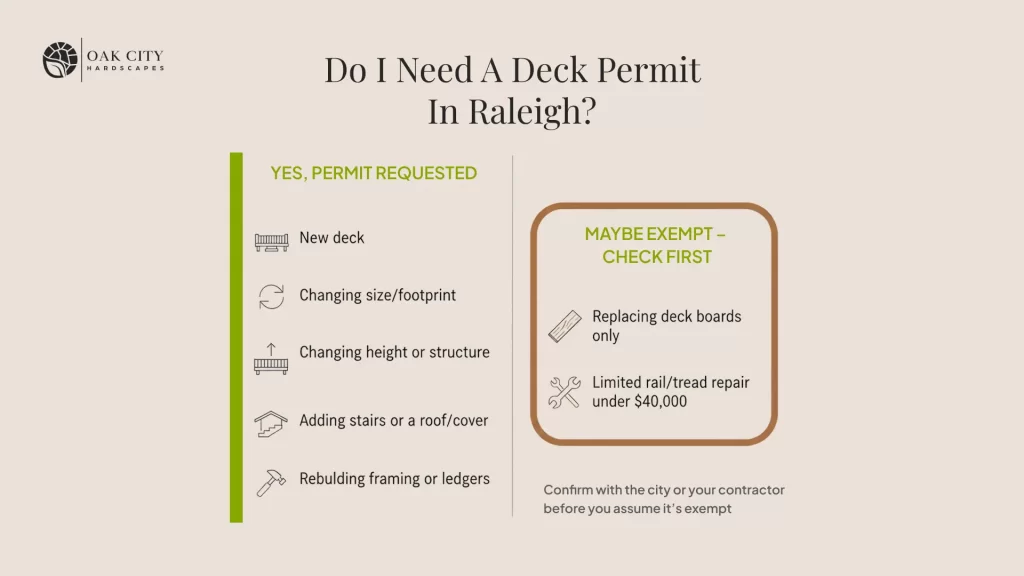
Raleigh Deck Permit Basics
Confirm Jurisdiction First
“Raleigh” can mean city limits, or it can mean a Raleigh mailing address in another jurisdiction.
If your property is inside the City of Raleigh limits, you will follow the City’s permit process through its Planning and Development department and portal.
If you are in a different town (such as Apex, Cary, Wake Forest, or others), their process may differ. Even nearby towns publish their own deck guidance and application requirements.
Tip: If you are not sure which office governs your address, check before you pay for drawings or a survey.
What You Need To Submit For A Deck Permit In Raleigh
Raleigh’s deck and porch permit page lays out a clear list of common requirements. The exact package can vary by site, but these items show up again and again:
- Residential Permit Application.
- A survey showing the proposed work on the property, with Raleigh noting it requires a certified survey by a land surveyor and explaining acceptable ways to present the proposed work using a supplemental copy.
- Owner Exemption Affidavit, if you are the homeowner acting as the builder.
- Permit Data Form.
- Elevations of the project include a roof, such as a screened porch or covered deck.
Depending on the site, you may also need approvals for septic, historic district review, variance requests, or stormwater requirements, as Raleigh calls out directly.
Where You Submit And How The Portal Works
Raleigh submissions and updates run through the Permit and Development Portal, with documents attached as PDFs, and inspections scheduled through the same system.
Raleigh’s portal help center also explains how inspections are scheduled; it notes you can log in and use the Inspections tab on your project.
Fees And Timing Expectations
Raleigh notes that a plan review fee is due prior to the project review, and other fees are due when permits are ready for issuance.
The best way to avoid delays is to submit a complete package the first time, especially the survey and any site constraints documentation.
The Big Raleigh-Specific Issues That Trip People Up
Certified Survey Requirement
Raleigh’s deck permit guidance emphasizes a certified survey done by a land surveyor, and it explains what is acceptable when you need to show the proposed work. This is one of the most common “missing item” delays because many homeowners do not have a current survey on hand.
Septic And Well Constraints
If your property uses septic or has a private well, Raleigh requires approval from Wake County Environmental Services before applying with the City. It also states that a deck, porch, or balcony may not be constructed over septic or wastewater systems or their repair area, and the site plan must be approved by Wake County in these cases.
Historic District Review
If the home is in a historic district or designated as a Raleigh Historic Landmark, Raleigh notes you may need a Certificate of Appropriateness through the Raleigh Historic Development Commission before you submit your permit application.
Stormwater And Impervious Surface Triggers
Raleigh flags stormwater requirements when a project adds 800 square feet or more of impervious surface or concentrates flow, such as into a pipe or downspout, requiring compliance with the Lot Grading Plan. That matters if your deck project is part of a larger outdoor living plan with patios, walkways, or drainage changes.
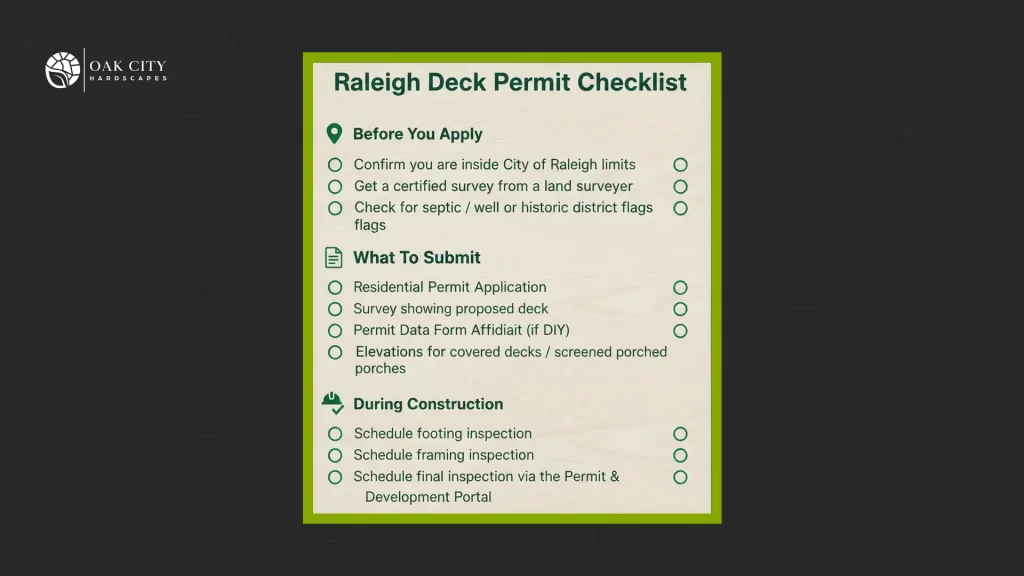
Inspections: What To Expect During The Build
Permits are not just paperwork; they tie directly to inspections.
Raleigh’s deck guidance explains that permitting and inspections help ensure zoning compliance and code-compliant construction methods, materials, supports, attachments, and safety items such as guardrails and handrails.
In most deck builds, inspections typically happen at key milestones, such as footings, framing, and final completion. Your permit record in the portal is also where inspection scheduling happens.
If you are working with a contractor, ask who is responsible for scheduling inspections and who will meet the inspector on-site.
Common Deck Code Items Inspectors Look For
You do not need to memorize code tables to benefit from this section. Knowing the “usual suspects” helps you understand why a permit matters.
Here are several code-related points Raleigh’s deck brochure highlights:
- Guardrails are required when the walking surface is 30 inches above the ground, and the guardrail must be at least 36 inches high.
- Stairs with four or more risers require guardrails on both sides, and stairs with a total rise of 30 inches or more must have guardrails or handrails on open sides.
- Lateral bracing may be required for certain attached decks over 4 feet above ground and for self-supported decks greater than 30 inches in height, based on how height is measured in the guidance.
These are exactly the kinds of details that get missed on unpermitted builds, and they can become expensive to correct after the fact.
How A Contractor Can Simplify The Permit Process
If you want the simplest path, hire a contractor who treats permitting as part of the build, not a separate headache.
A good deck builder, like Oak City Hardscapes, will usually help align the design with setbacks, prepare or coordinate the drawings, ensure the right documents are submitted, and schedule inspections at the appropriate stages.
Oak City Hardscapes’ deck services focus on custom deck builds and renovations in the Raleigh area, and their consultation process is designed to plan the scope early, including logistics that typically affect approvals and timing.
Frequently Asked Questions
Do I Need A Permit If My Deck Is Low To The Ground?
In Raleigh, the safest assumption is yes, and you should confirm with the City before building. Raleigh’s own deck guidance stresses obtaining a building permit before you build.
Do I Need A Permit To Replace Deck Boards Or Railings?
Possibly not, depending on scope and cost, but do not guess. North Carolina OSFM guidance explains that limited exemptions may apply to the repair or replacement of deck floorboards and, in some cases, guardrails and stair treads when the project cost is $40,000 or less. Confirm with your local permitting office before starting.
What Documents Does Raleigh Usually Require?
Common requirements include a Residential Permit Application, a certified survey showing the proposed work, a Permit Data Form, and an Owner Exemption Affidavit if the homeowner is acting as the builder. Covered decks or screened porches also require elevations.
What If My Property Has Septic?
Raleigh notes that Wake County Environmental Services approval is required before applying to the City for properties with private wells or septic systems, and that the structure may not be constructed over septic systems or their repair areas.
How Do Inspections Get Scheduled In Raleigh?
Raleigh allows inspections to be scheduled via the Permit and Development Portal. The portal help center notes that you can log in and use the Inspections tab on your project.
What If I Am In A Historic District?
Raleigh notes you may need a Certificate of Appropriateness through the Raleigh Historic Development Commission before submitting the permit application.
What If I Want A Covered Deck Or Screened Porch?
Raleigh’s guidance states that elevations are required for screened porches and for any structure with a roof, including patios or covered decks.
Conclusion
Most deck projects in Raleigh should be treated as permitted construction. The fastest way to avoid delays is to confirm jurisdiction, prepare the correct documents, especially the certified survey, and account for site-specific rules like septic, historic review, and stormwater triggers.
If you want help planning a deck that is designed for real-life use and built to pass inspections smoothly, start with Oak City Hardscapes’ deck services and schedule a consultation to walk the site and scope.
Key Takeaway
- In Raleigh, plan on pulling a permit before building a deck; the City’s deck guidance explicitly advises getting the building permit before you build.
- Raleigh typically requires a Residential Permit Application, a certified survey showing the proposed work, and additional forms, depending on the project.
- Septic, historic district review, and stormwater triggers can change what you must submit, and can slow approvals if not handled early.
- Inspections are scheduled through the Permit and Development Portal and are part of Raleigh’s process for verifying zoning and code compliance.
- Some limited repair work may be exempt under state guidance, but structural deck work is not the place to guess; confirm with the permitting office first.