
You’re standing in your backyard on a Saturday morning, coffee in hand. The sun’s just right, the air isn’t sticky yet, and you’re already thinking: “This space has so much potential. But is it worth the investment?” The answer might surprise you.
Raleigh homeowners like you are discovering something builders and real estate agents have known for years: outdoor living spaces don’t just make your weekends better. They make your home worth more. Not just “a little more.” We’re talking 5 to 15 percent higher home value, depending on how you build it out.
But here’s what most people miss: not every backyard upgrade gets you that return. The ones that do share something. They’re thoughtful. They’re built with permanent materials. And they’re built to last.
Let’s walk through what actually moves the needle on your Raleigh home’s value, and more importantly, why.
How Outdoor Living Spaces Drive Home Value in Raleigh
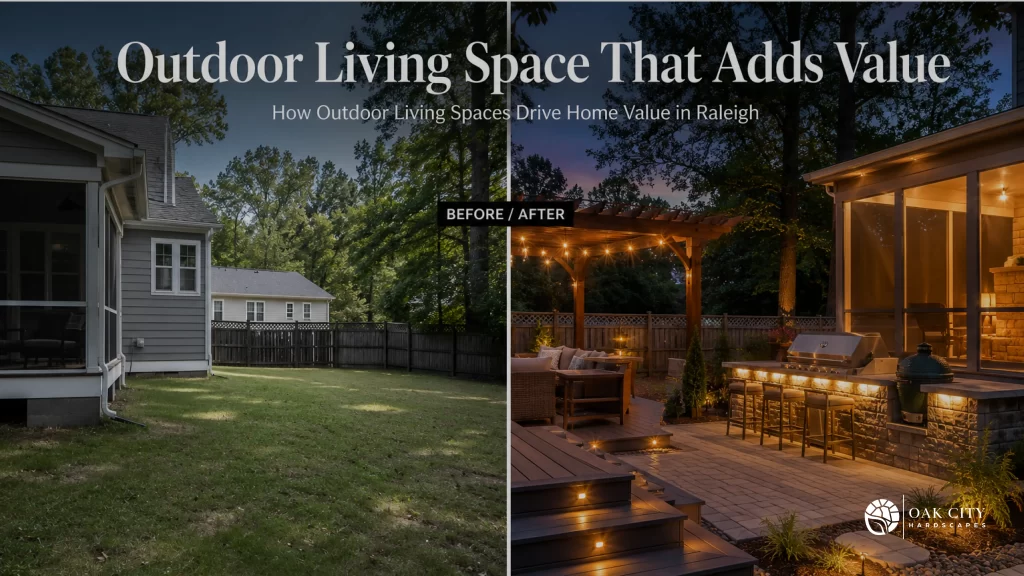
There’s a simple reason outdoor living spaces increase home value: they solve a problem every homeowner has.
You can see the sun setting from your living room. You can admire the backyard through a window. But you can’t actually live out there. Not without proper flooring, shade, maybe a kitchen. The second you add those elements, your home becomes a lifestyle upgrade, not just a house.
Raleigh’s climate makes this even more powerful. Our spring and fall are absolutely magical, and the climate data proves it. Summers are hot but manageable with the right setup. A well-designed outdoor space extends your usable square footage for eight months out of the year. Buyers see that, and they pay for it.
The psychology works too. When a home has a complete outdoor living space, buyers aren’t just buying a house. They’re buying weekend brunches, dinner parties, family gatherings. Research from the National Association of REALTORS consistently shows that outdoor features are among the highest-priority recommendations for improving home value and buyer appeal. That emotional story adds real dollars to your sale price.
The Materials That Actually Matter for ROI
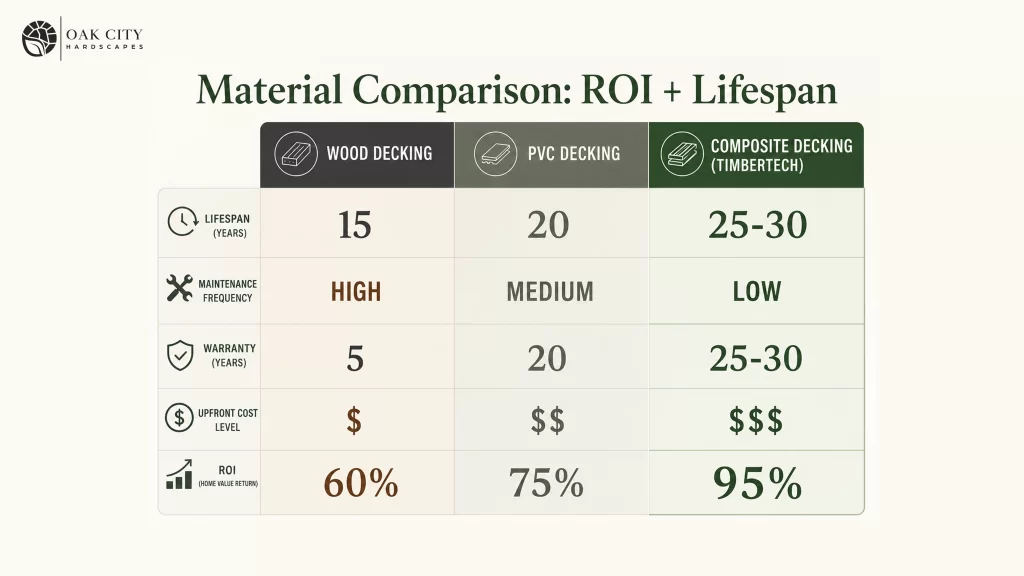
Here’s where most backyard projects fail: homeowners treat outdoor living as temporary. Wood that needs staining every two years. Paint that fades. Pavers that shift. Then they wonder why buyers aren’t impressed.
Buyers want permanent. They want low-maintenance. They want to buy your outdoor space and move in without adding a to-do list.
Composite decking is the material that changed this equation. Unlike traditional wood decks, composite decks require minimal maintenance and last 25 to 30 years. No splinters, no rot, no seasonal staining. The top performers in the Raleigh market right now are composite solutions like TimberTech, which come with up to 50-year warranties. That’s not a selling point for next year. That’s a legacy investment.
Hardscape materials matter just as much. Natural stone pavers hold their value better than asphalt or loose gravel. Retaining walls built from quality stone or manufactured blocks signal permanence. Buyers notice the difference between something built to impress and something built to last.
Design Elements That Buyers Notice (And Care About)
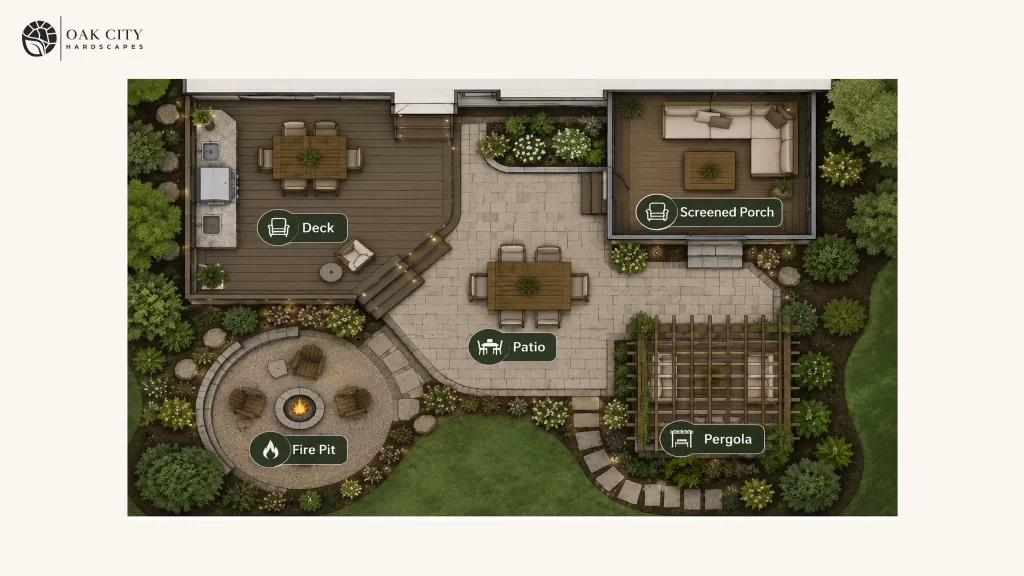
Not all outdoor living spaces are created equal. The ones that add the most value follow a pattern.
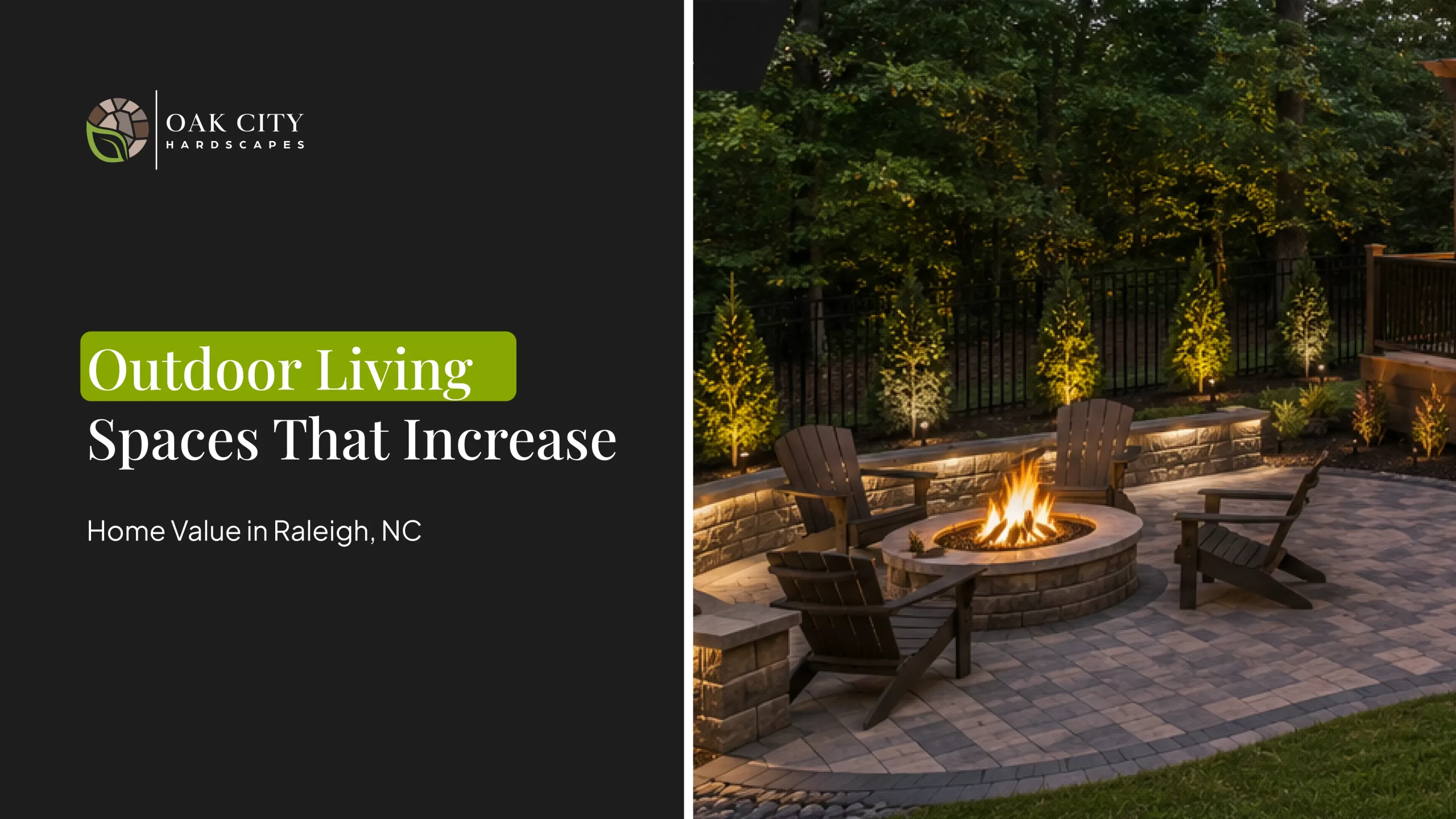
First, they have clear zones. A deck for entertaining. A patio for dining. Maybe a fire pit area for gathering. Buyers want to envision different uses for the space, which means it can’t all look the same. Variety suggests intentionality.
Second, they include permanent shade. A pergola, a gazebo, or a covered structure. Raleigh summers get hot, and buyers want proof that you’ve thought about comfort. A covered outdoor kitchen or a screened porch is the next level up, signaling that real dollars have been spent on your outdoor living space.
Third, they connect visibly to the house. A deck or patio that flows directly from your back door or sliding glass window creates the feeling of an extended living room. An outdoor space isolated in the corner of your yard feels like an afterthought. The best outdoor living spaces blur the line between indoors and out.
Screened Porches and Composite Decks: The Premium Play
If you want serious ROI, this is where the conversation changes.
A screened porch in Raleigh isn’t just nice. It’s necessary. Mosquitoes, pollen, afternoon thunderstorms. A high-quality screened-in porch solves all three and adds square footage to your home in the buyer’s mind. You’re not just adding enjoyment. You’re adding livable space.
Pair that with a composite deck, and you’ve got a one-two combination that works. The deck extends your entertaining footprint. The screened porch gives you year-round usability and protection from Raleigh’s summer humidity. Together, they create an outdoor living space that feels complete, not experimental.
The key is building both with materials that will still be performing 10 years from now. Composite decking and quality pressure-treated framing for screened porches are not budget plays, but they’re the ones that hold their value.
The Permit Question No One Talks About
Here’s a conversation most homeowners never think about until it’s too late: permits matter to buyers.
A properly permitted deck or porch signals that the work was inspected and approved. It protects the next owner from inheriting a liability. It also means your home passes appraisal without questions. An unpermitted structure? That’s a red flag that tanks value.
Raleigh’s permit process isn’t complicated, but it’s not optional either. The good news is that permitted construction always holds its value better in resale. It’s a small price to pay for peace of mind and a faster sale.
How Much Value Can You Actually Add?
The numbers vary depending on what you build.
A mid-range deck (500-600 square feet) typically returns 50 to 70 percent of its cost at resale. So if you spend 20,000 dollars, expect to add 10,000 to 14,000 dollars to your home’s value. A screened porch with a deck pushes that higher: often 60 to 80 percent return. Premium outdoor living spaces that include kitchens or fire features can return 80 to 100 percent.
The catch? These numbers only work if the materials and craftsmanship stand out. A deck that looks like it was thrown together in a weekend won’t command those premiums. One that’s clearly built to last, with thoughtful design and premium finishes, absolutely will.
Why Oak City Creates Outdoor Living Spaces That Sell
When Max Laing and Grayson Boyd started Oak City Hardscapes, they built one premise into every project: relentless pursuit of perfection is required to bring bold, complex outdoor spaces to life.
That’s not marketing speak. It means they’re on every job. Not delegating to crews. Not treating outdoor living spaces like production-line work. Each project gets the same personal standard that built the company.
Here’s what that actually looks like: custom architectural drawings before a single board is cut, ensuring you know exactly what you’re getting. When it comes to the technical side, every permit is handled in-house, and here’s what most homeowners don’t realize—every inspection passes on the first attempt. That’s not luck. That’s detail.
Then there’s the material game. Oak City is a certified TimberTech installer, meaning they don’t just recommend composite decking. They’ve built dozens of them. If you’re deciding between materials, TimberTech composite decking consistently outperforms wood in durability, maintenance, and resale appeal. And if you’re weighing TimberTech against other composites, the comparison is worth understanding before you commit.
The real differentiator? Timeline and budget clarity. Most contractors give estimates that become moving targets. Oak City doesn’t. You’ll know exactly how long your deck or screened porch takes to build, what that timeline includes, and why it matters to your resale value. And when you’re ready to understand the actual cost breakdown of composite decking installation in Raleigh, you get transparent numbers from people who’ve done 200+ of these projects.
Raleigh homeowners trust Oak City with outdoor living spaces because they know these aren’t disposable projects. They’re investments. And Max and Grayson treat them that way every time.
When it’s time to sell, that difference shows. Your outdoor living space doesn’t just add to your home’s dollar value. It tells the next owner that every detail in your home was built to the same standard.
Frequently Asked Questions
Q: How much does a composite deck increase home value in Raleigh? A deck that costs 20,000 dollars typically adds 10,000 to 14,000 dollars to your home’s value. Screened porches and integrated outdoor kitchens return higher percentages.
Q: Do I need a permit for a deck in Raleigh? Yes. Decks over 30 inches above ground require permits and inspections in Raleigh. Permits protect your investment and make resale easier.
Q: What materials hold their value best for outdoor living spaces? Composite decking, natural stone pavers, and pressure-treated framing for screened structures all maintain value. They’re durable, low-maintenance, and impress buyers.
Q: How long does a composite deck last? Quality composite decks like TimberTech last 25 to 30 years with minimal maintenance and come with warranties up to 50 years.
Q: Should I build a screened porch or a deck first? Start with a deck if budget is tight. A screened porch adds more value but costs more. A combination of both creates maximum ROI.
Q: What’s the difference between an outdoor living space and just a deck? A true outdoor living space includes multiple zones (deck, patio, shade structure) and intentional design. A single deck is one element. Multiple elements connected thoughtfully create an outdoor living space that buyers value.
Q: Do fire pits and outdoor kitchens increase home value? Yes, but only if they’re built well. A quality outdoor kitchen can return 80 to 100 percent of its cost. A poorly built one returns almost nothing.
Conclusion
Outdoor living spaces increase home value because they solve a real problem: they extend your home’s usable footprint and create emotional connection to your property. The ones that deliver real ROI share three things: permanent materials, thoughtful design, and expert execution. In Raleigh’s market, that combination consistently pays for itself at resale.
The difference between a backyard project and a value-add investment comes down to one thing: who builds it and how. Oak City Hardscapes specializes in creating outdoor living spaces that last for decades and impress buyers. From composite deck installation to screened-in porches and integrated outdoor kitchens, every project gets the personal attention and premium materials that actually move the value needle.
Start with a free consultation. We’ll show you what your outdoor living space could look like and exactly what it will cost. No pressure. Just expert guidance from people who’ve built this for 200 homes across Raleigh.
Book your free consultation with Oak City Hardscapes today.
Key Takeaways
- Outdoor living spaces add 5 to 15 percent to your Raleigh home’s value when built with quality materials
- Composite decking and screened porches are the highest-ROI combination for most homes
- Design matters: buyers want multiple zones, clear function, and connection to the house
- Permanent materials (composite, stone, quality framing) hold value better than temporary solutions
- Permitted construction protects your investment and accelerates resale
- A 20,000-dollar deck investment typically adds 10,000 to 14,000 dollars to home value
- Outdoor kitchens and fire features can return 80 to 100 percent ROI if executed well
- Unpermitted outdoor structures create red flags for buyers and appraisers
- Professional design and execution matter more than budget for resale value
- The best outdoor living spaces feel like an extension of your home, not an afterthought