
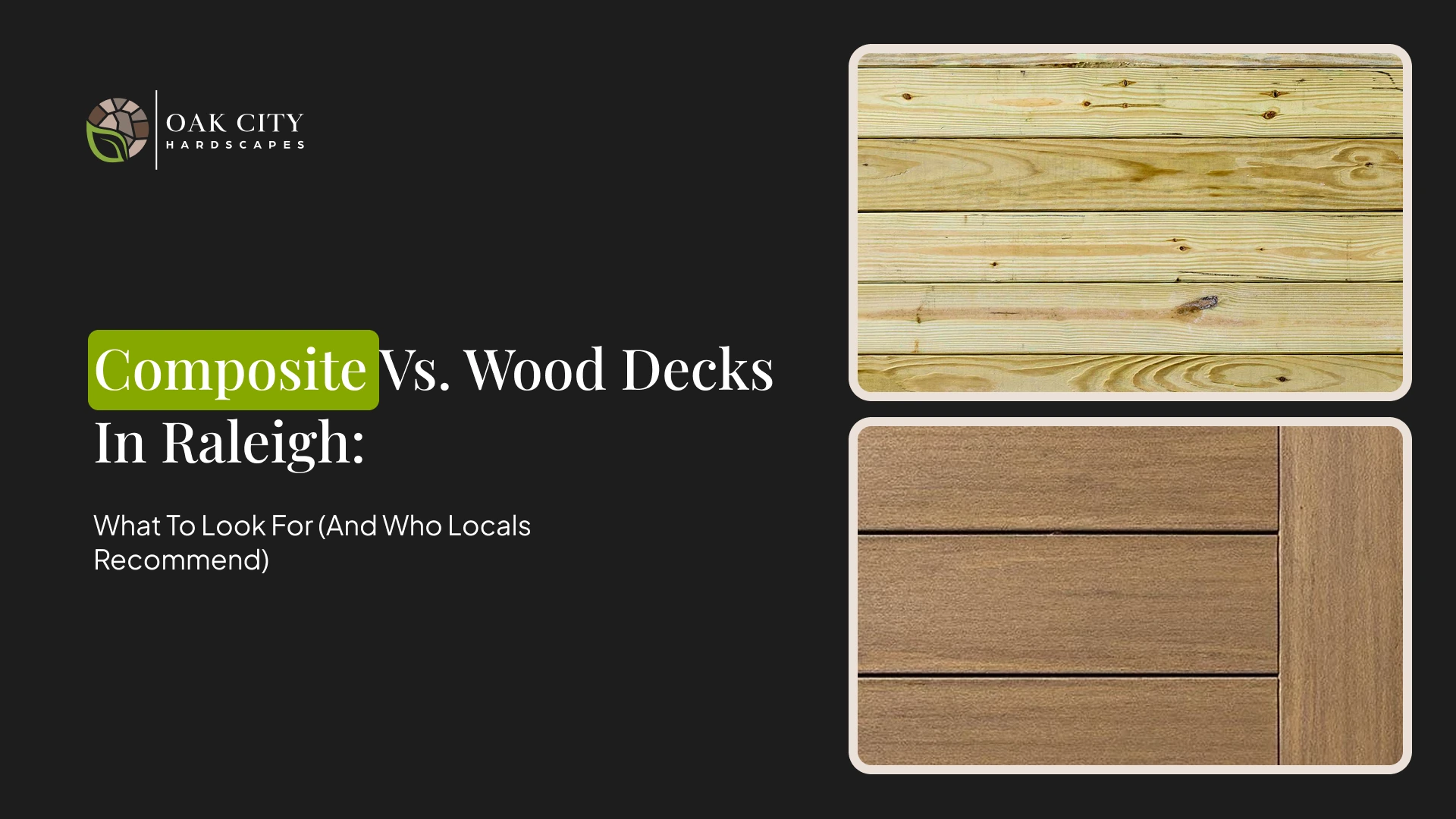
Raleigh decks do not get a gentle life. Between humid summers, surprise downpours, pollen season, and the everyday wear of grilling and foot traffic, your decking choice gets tested fast.
If the decision feels stuck between the warm look of wood and the low-maintenance promise of composite, this guide breaks it down in a Raleigh-friendly way. By the end, it should be clear which option best fits your backyard, budget, and level of upkeep.
Quick Answer For Raleigh Homeowners
Composite usually wins in Raleigh when:
- The goal is minimal maintenance, consistent color, and fewer splinters.
- The deck gets heavy use, grilling, kids, pets, or lots of entertaining.
- The backyard stays damp or shaded, where mold and mildew appear on neglected wood more quickly.
Wood still makes sense when:
- The natural look and the ability to stain or repaint later matter most.
- Upfront budget is tight, and you are realistic about ongoing sealing and repairs.
The most common “best of both” option:
- Pressure-treated framing below, with composite deck boards above. That keeps the structure strong while lowering surface maintenance.
Why Raleigh’s Climate Matters For Deck Materials
Moisture is the main villain in Raleigh deck longevity.
Recent weather records show Raleigh can swing between drier and wetter years, with 2025 annual precipitation at 41.32 inches, and 2024 at 54.20 inches at RDU reporting.
There is also evidence that rainfall intensity has increased across many U.S. cities, including Raleigh, reinforcing the idea that drainage and water management should be part of the decision, not an afterthought.
What this means in plain terms:
- Wood decks that are not maintained can absorb moisture, swell, crack, and develop rot or mildew.
- Many composite boards resist rot and do not require staining or sealing, but the framing underneath still needs solid detailing and airflow.
Composite Deck Vs Wood Deck
Upfront Cost Vs Long-Term Cost Of Ownership
Wood is often cheaper to build upfront, especially pressure-treated pine. Composite typically costs more initially, and some composite installations require additional blocking and detailing, which can affect labor costs.
Where composite can pull ahead is long-term ownership. A manufacturer comparison from Trex highlights the idea that maintenance costs for wood can add up over time, while composite maintenance is typically much lower. Treat those numbers as directional, since every deck and household is different, but the pattern is real.
A practical way to compare:
- If you plan to stay in the home for many years and do not want a recurring stain-and-seal schedule, composite often wins the long game.
- If you expect to move soon and the deck is more about immediate curb appeal, wood can still be a reasonable choice.
Maintenance And Weekend Time
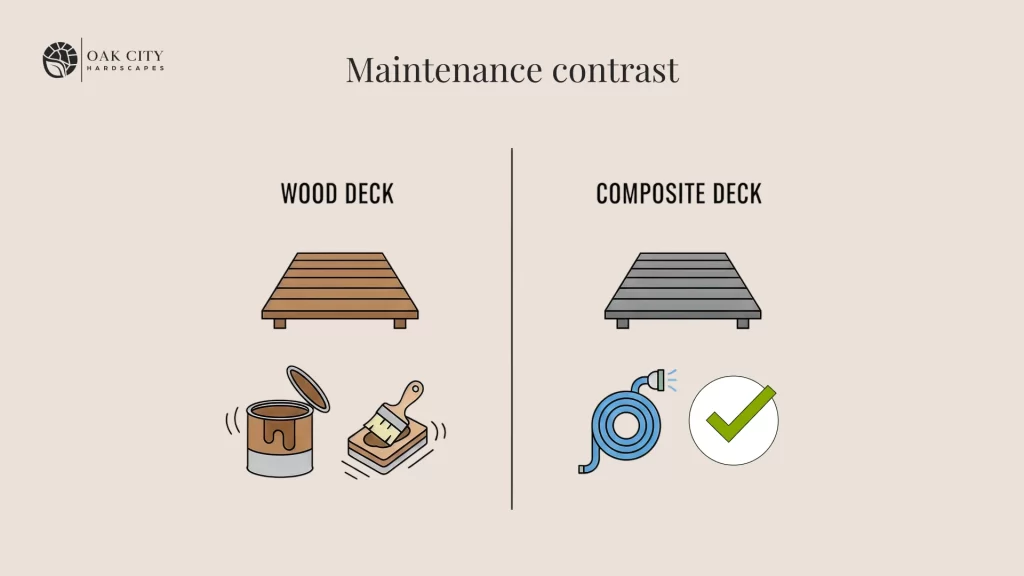
Wood usually needs periodic cleaning, sealing, or staining to protect it from moisture and sunlight. Decks.com notes that wood decks commonly require sanding, cleaning, staining, painting, and sealing every one to two years.
Bob Vila similarly explains that wood typically needs to be coated with deck sealer on a multi-year cycle.
Composite typically skips staining and sealing. Many composite boards are designed to resist fading, splintering, and rot, which is why homeowners often choose them to avoid the constant maintenance loop.
Durability, Rot, And Insect Pressure
In Raleigh, durability is not only about foot traffic. It is also about moisture and pests.
Composite is widely positioned as more resistant to moisture-related issues like rot and warping, and it is also less attractive to many insects than untreated wood.
For wood, pressure treatment helps, but it is not a force field. NC State Extension notes that termites can still attack cellulose materials, and treated lumber is not a substitute for termite prevention and routine inspections.
North Carolina’s structural pest control guidance also emphasizes using pressure-treated wood for wood that contacts soil, which reinforces why correct detailing and separation from soil matter.
Looks, Feel, And Design Flexibility
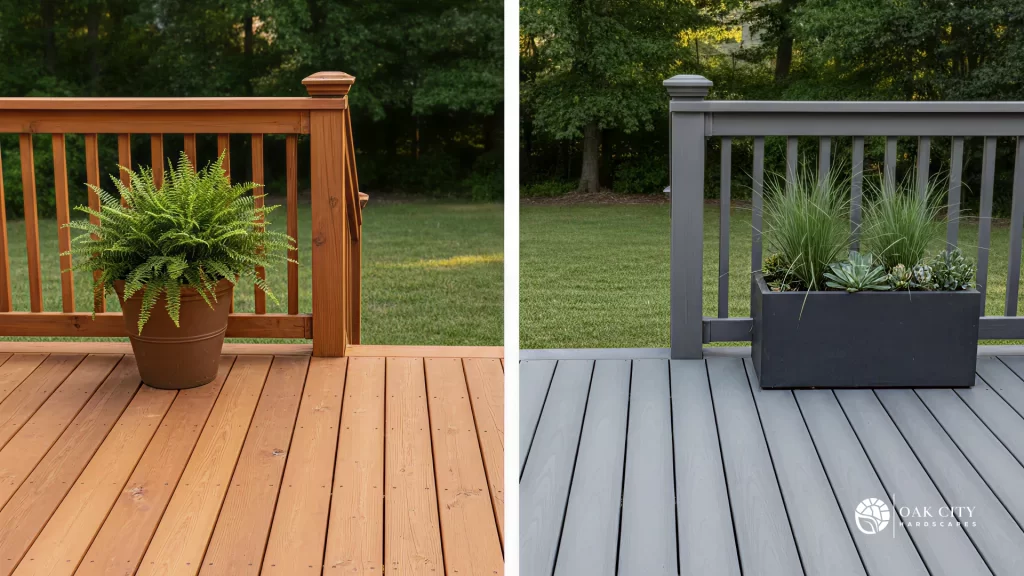
Wood’s biggest advantage is authenticity. You can stain it, repaint it, and refinish it to match a home style change later.
Composite has improved a lot in grain patterns and color options, and many homeowners prefer the consistent finish. The tradeoff is that you typically cannot “refresh” the look with stain the way you can with wood.
Comfort In Summer Heat And After Rain
This is where Raleigh homeowners should pause for a second.
All decking materials can get hot in direct sunlight, but composite decking can retain more heat, depending on board type and color. Bob Vila discusses this as a common concern and notes that performance varies by product.
Trex also notes that even heat-mitigating lines can still get hot in direct sun, especially in darker colors.
After rain, traction matters. Some composite surfaces can feel slick when wet, although textured boards and good cleaning habits help.
A simple Raleigh-friendly guideline:
- For full sun decks, consider lighter colors and ask about heat-mitigating options.
- For shaded decks under trees, prioritize surfaces that are easy to clean and resist mildew buildup.
Repairs, Resurfacing, And Board Replacement
Wood is easier to sand and refinish, so small surface issues can often be corrected without replacing boards.
Composite cannot be sanded in the same way, and scratches can be harder to disguise, depending on the board. Composite can also stain, especially if grease or leaf tannins sit too long.
If the substructure is solid, resurfacing can sometimes be an option, whether replacing wood boards with new wood or upgrading to composite. This is one of those moments where a pro inspection saves money.
Sustainability Considerations
Both sides have nuance.
Bob Vila points out that wood is renewable, but pressure-treated chemicals and sourcing concerns for some imported hardwoods complicate the picture, and composite varies by brand and recycled content.
This is a good place to ask your builder for sourcing details and brand documentation.
Side-By-Side Comparison Table
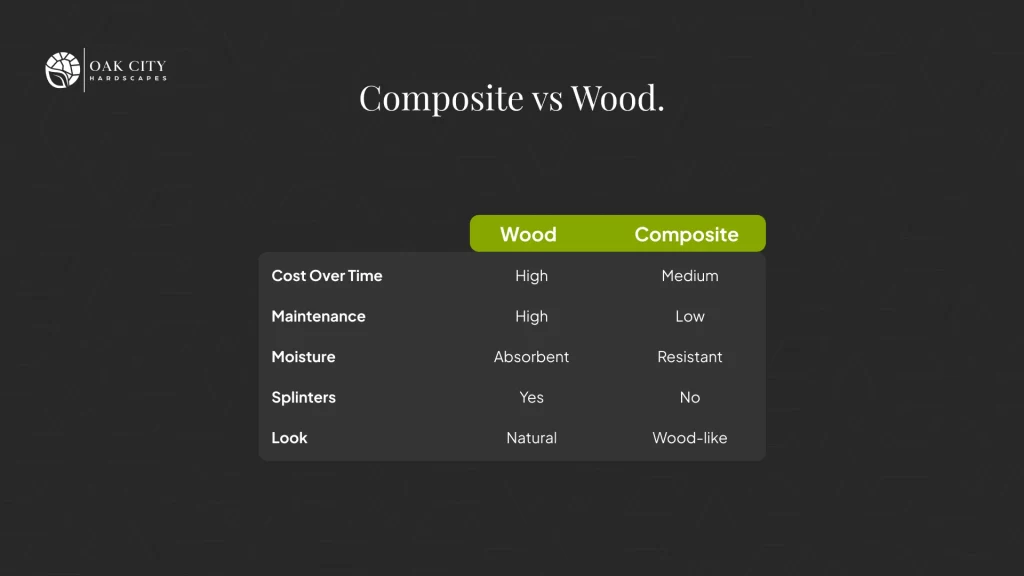
| Category | Composite Decking | Wood Decking |
| Upfront Cost | Typically higher | Typically lower for pressure-treated |
| Ongoing Maintenance | Usually low, no staining or sealing | Regular cleaning plus stain or seal cycles |
| Moisture Resistance | High for many products | Depends heavily on upkeep |
| Splinters | Generally splinter-free | Can splinter as boards age |
| Heat in the Sun | Can run hotter depending on color and board type | Often cooler than some composites, varies by species and finish |
| Design Flexibility | Many colors, consistent look | Highly customizable with stains and finishes |
| Repairs | Scratches may be harder to hide | Can often sand and refinish smaller issues |
| Longevity | Often 25+ years with proper install | Often 10 to 20 years, depending on upkeep and species |
Best Choice By Backyard Scenario In Raleigh
Kids, Pets, And Barefoot Traffic
- Composite is often the easier choice because splinters are less of a concern, and routine maintenance is simpler.
- Wood can still work well, but the deck needs a real maintenance plan so boards do not crack or splinter as they age.
Shaded Backyards With Trees And Heavy Pollen
- Composite tends to win because cleaning is simpler, and there is no need to reapply stain after every deep wash.
- Wood can look great in shade, but shade plus moisture increases the importance of sealing and routine cleaning.
Full Sun Decks For Lounging
- Lighter composite colors and heat-mitigating options can help, but it is smart to request samples and consider bare feet.
- Wood can still get hot, especially with darker stains, so the finish choice matters either way.
Short-Term Homeowners
- Wood may be appealing if the goal is a lower upfront spend and a classic look today.
- A composite deck still makes sense if the deck will be a daily-use space and you want fewer maintenance tasks while living there.
Long-Term Homeowners
- Composite is usually the stress-free choice for long-term ownership, especially if you do not want the stain-and-seal schedule repeated.
- High-quality wood can also age beautifully if you enjoy the upkeep and want the true wood look.
What To Ask A Deck Builder Before Choosing Materials
- Which exact product line is being quoted? “Composite” is too vague.
- What is the maintenance plan, in writing, for the material you choose?
- How will the builder manage moisture under the deck, including ventilation and drainage?
- What is the plan for termites and routine inspections, especially for wood components?
- What comfort factors should be expected: heat in direct sun, traction when wet, and texture?
Permits And Safety Basics
If a project changes the structure, height, or attachment to the home, permitting is often required. Raleigh provides official guidance for building a deck and submitting it through the Permit and Development Portal.
Safety matters too. The North Carolina Residential Code includes requirements for wood decks, including guard and stair safety details.
Why Many Homeowners Compare Options With Oak City Hardscapes
Oak City Hardscapes builds composite decks as part of a broader outdoor living approach in Raleigh, which helps homeowners plan a full backyard upgrade over time.
You can also check Oak City Hardscapes’ deck portfolio entries, which list materials, making it easier to compare real-world results rather than just product brochures.
Examples worth referencing when comparing finishes and styles:
- Covered Bridge: Trex Enhance Naturals Rocky Harbor with white fascia.
- Florida: Trex Select Pebble Gray with white fascia and railings.
- Starita: details like Cortex screws and plugs to hide fasteners, plus a custom bench.
FAQs
What Lasts Longer In Raleigh, Composite Or Wood?
Composite commonly lasts longer with less upkeep, while wood longevity depends heavily on consistent sealing and maintenance.
Does Composite Get Hotter Than Wood?
It can, depending on board type and color, and it is worth reviewing samples and discussing heat-mitigating options for full sun decks.
How Often Does A Wood Deck Need To Be Sealed Or Stained?
Many wood decks follow a one- to two-year maintenance schedule for cleaning and protection, and the exact schedule depends on sun exposure and moisture.
Are Termites A Real Concern For Decks In North Carolina?
Yes. Treated lumber helps, but termite prevention and inspections still matter, especially for any wood components near soil or moisture.
Can A Wood Deck Be Resurfaced With Composite Boards?
Sometimes, if the structure is sound and properly detailed. An inspection is the best way to confirm whether the framing can support the new surface.
Do Deck Projects Require A Permit In Raleigh?
Raleigh provides a deck-permitting guide and a portal process, and many structural changes will require permitting and inspections.
Conclusion
Composite and wood can both work in Raleigh, but they fit different lifestyles.
If the priority is low maintenance, fewer splinters, and strong moisture resistance, composite is often the most practical pick for day-to-day Raleigh living.
If the priority is a true natural look, full flexibility with stains, and a lower upfront price, wood can be a great choice, as long as the maintenance plan is realistic.
Key Takeaways:
- Choose composite if long-term ease, consistent appearanceI color, and low upkeep matter most.
- Choose wood if you want a natural look and you are willing to clean and reseal regularly.
- For Raleigh weather, prioritize moisture management, ventilation, and smart detailing, no matter which surface you pick.
- If termites are a concern, remember treated lumber helps, but does not replace prevention and inspections.