
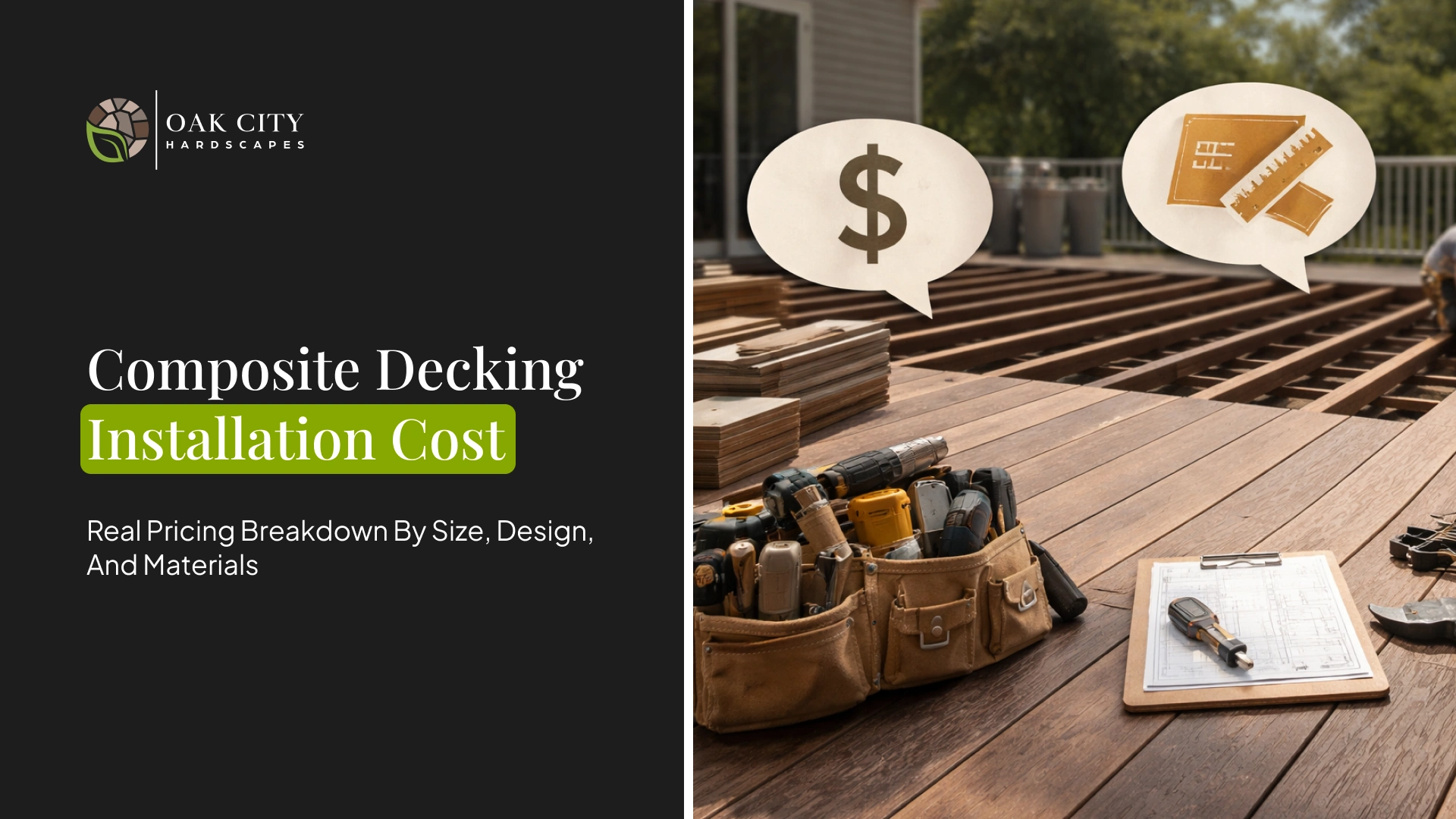
You want a composite deck because you do not want the yearly sanding, staining, and repairs. But before you pick a color or a railing style, you want the number that matters most.
What is the composite decking installation cost, and what is it really going to be for your yard, your home, and the way you plan to use the space?
This guide breaks down pricing the way homeowners actually think about it: by deck size, layout, material tier, railings, stairs, and the hidden costs that can surprise people mid-project.
Composite Decking Installation Cost At A Glance
There are two numbers you should keep separate:
- Material cost for composite decking systems
- Total installed cost (materials plus labor, project management, and build complexity)
Trex, for example, states its estimated material cost commonly runs from $10 to $27 per square foot when you include substructure, decking, hardware, and fasteners.
For installed pricing, many national resources place composite deck projects in a wide range, often around $40 to $80 per square foot installed, depending on design and materials.
For Raleigh specifically, Angi reports that building a deck typically costs $30 to $50 per square foot, with composite materials commonly priced at $10 to $19 per square foot and local labor often in the $13 to $30 per square foot range.
Local reality check: Oak City Hardscapes notes that composite deck costs depend heavily on size, design, and materials, and that many Raleigh projects can fall into a very wide total range once you include custom features, elevation, and upgraded finishes.
If you want a fast starting point for your planning, use this rule of thumb:
- Simple, ground-level composite decks tend to land at the lower end of the range.
- Elevated decks, complex shapes, premium railings, and multi-stair layouts move quickly into higher tiers.
Composite Deck Cost Per Square Foot
When people search “composite deck cost per square foot,” they are usually trying to compare quotes or set a realistic budget before they call a builder.
The tricky part is that not everyone includes the same things in that number.
What Cost Per Square Foot Should Include
A true installed cost per square foot typically includes:
- Footings and structural support
- Framing and substructure
- Decking boards and fasteners
- Fascia and trim details
- Standard labor and installation
- Basic jobsite protection and cleanup
It may not include:
- Demolition and haul-off of an old deck
- Permit fees and inspection coordination
- Premium railings (cable, glass, high-end aluminum)
- Complex or multiple stair runs
- Lighting, drainage systems, or under-deck waterproofing
- Built-ins like benches, planters, or privacy screens
Trex also notes that labor and management can account for nearly two-thirds of total costs, which is why the same material can have very different installed pricing depending on complexity and crew time.
A Practical Pricing Range To Use For Planning
For budget planning, homeowners often find it easiest to think in tiers. These ranges reflect common pro-built pricing patterns when you factor in structure, finish, and real-world build time, while staying aligned with widely published installed ranges.
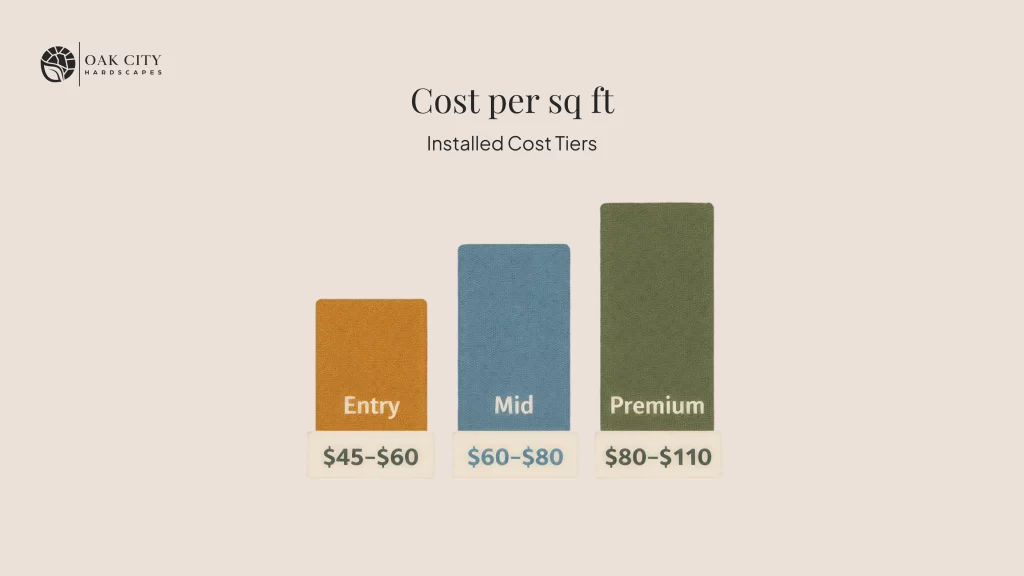
Entry-Level Composite Build
$45 to $60 per square foot installed
Mid-Range Composite Build
$60 to $80 per square foot installed
Premium Or Complex Composite Build
$80 to $110 per square foot installed
These are planning ranges, not a quote. A clean, simple rectangle can be efficient. A multi-level deck with cable railing, wide stairs, and lighting is a different project.
Real Price Examples By Deck Size
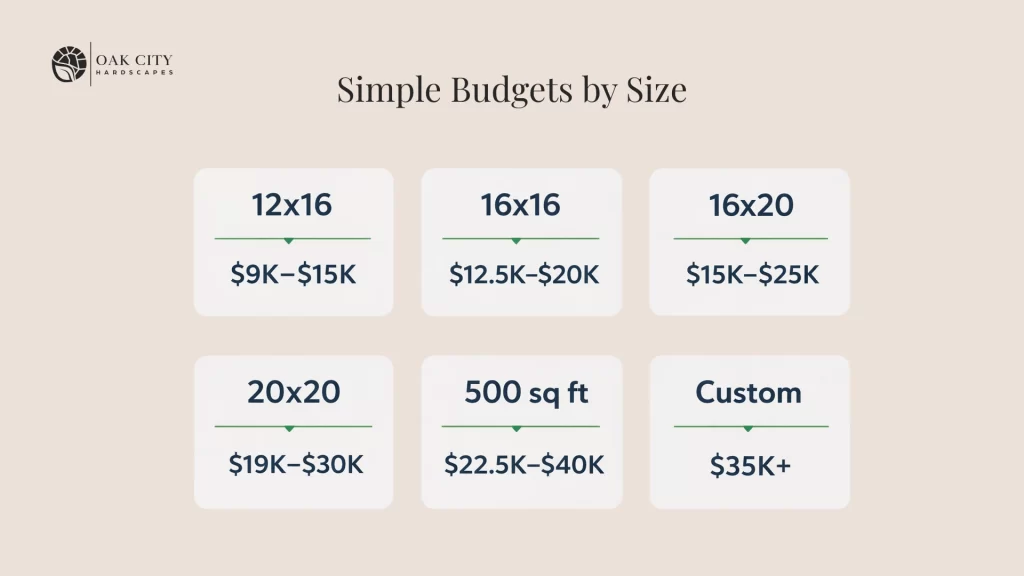
Below are sample installed budget ranges using the tier approach above. This helps you translate “per square foot” into a real total.
Assumptions for these examples: standard layout, typical railing needs, and average site conditions. Elevated decks, extensive stairs, demolition, and premium features add cost.
| Deck Size (Sq Ft) | Entry-Level $45–$60 | Mid-Range $60–$80 | Premium $80–$110 |
| 120 | $5,400–$7,200 | $7,200–$9,600 | $9,600–$13,200 |
| 160 | $7,200–$9,600 | $9,600–$12,800 | $12,800–$17,600 |
| 192 (12×16) | $8,640–$11,520 | $11,520–$15,360 | $15,360–$21,120 |
| 256 (16×16) | $11,520–$15,360 | $15,360–$20,480 | $20,480–$28,160 |
| 320 (16×20) | $14,400–$19,200 | $19,200–$25,600 | $25,600–$35,200 |
| 400 (20×20) | $18,000–$24,000 | $24,000–$32,000 | $32,000–$44,000 |
| 500 | $22,500–$30,000 | $30,000–$40,000 | $40,000–$55,000 |
If you want a second reference point for common deck sizes, Angi’s Raleigh table includes example totals for sizes like 12×16, 16×20, and 20×20 within its local cost guidance.
What Drives Composite Deck Pricing
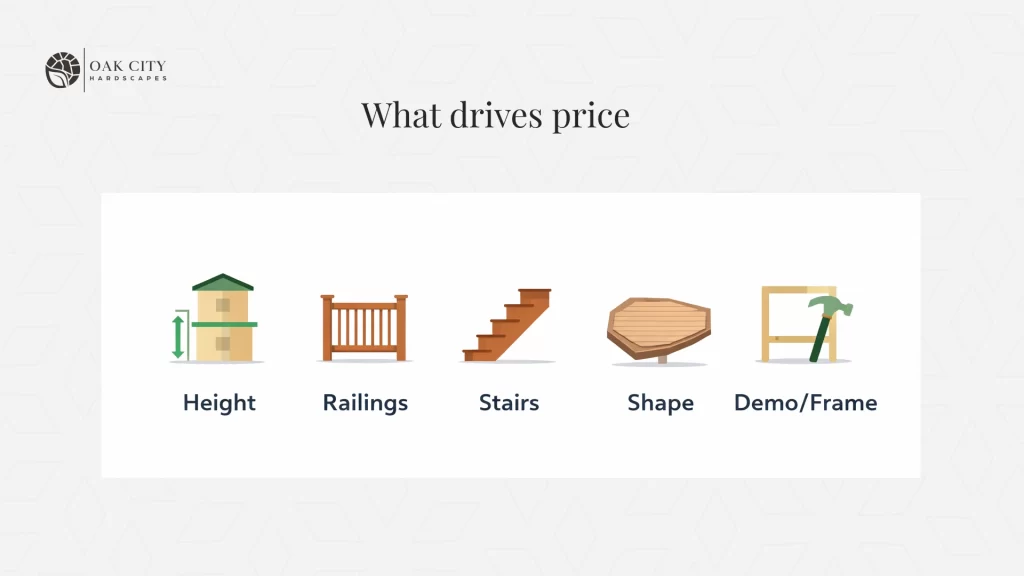
If you want to understand why one quote is $18,000 and another is $45,000, here are the usual reasons.
The Condition Of Your Existing Structure
If you are replacing old deck boards, the frame may or may not be reusable. Trex specifically notes that the condition of the current substructure can impact a sizable portion of the cost.
Common outcomes:
- Best case: frame is sound and can be adapted, saving time and lumber.
- More common: portions of the framing need repairs, upgrades, or full replacement to meet safety and composite requirements.
Deck Height And Access
Height changes everything. Elevated decks typically require more labor, more bracing, longer stairs, and more safety work.
Railings: The Biggest “Invisible” Cost
Many homeowners budget for the boards, then get surprised by the total for the railing.
Railing costs vary widely by:
- Material (pressure-treated, composite, aluminum, cable)
- Linear feet required
- Post spacing and stair sections
- Complexity of corners and transitions
If you want to control the budget, pick your railing style early, not after the deck layout is finalized.
Stairs And Landings
Stairs are labor-heavy. Wide staircases, multiple runs, or complicated landings quickly increase costs by increasing framing time and railing length.
Shape And Framing Complexity
The most cost-effective deck is usually a rectangle or a simple L-shape.
Costs rise with:
- Curves
- Multiple angles
- Multi-level designs
- Picture framing borders and breaker boards
- Built-in benches or planters
Season And Scheduling
In peak season, crews are busy, and timelines can be tighter. Planning early gives you more options and can help avoid rushed decisions that increase cost.
Materials Choices That Change The Total
A composite is not one product. Your material tier affects both the board cost and the labor details.
Board Tier And Brand
Some brands provide material calculators and published ranges, which help you set expectations before you choose finishes. Trex, for example, provides guidance on material cost ranges and the cost factors that influence the total.
In general:
- Value composite boards reduce material cost but may offer fewer color and texture options.
- Mid-tier boards often balance performance and looks.
- Premium composite and PVC lines cost more but may offer richer grain patterns and broader warranty tiers.
Substructure Materials
Some builds use pressure-treated framing. Others upgrade sections for durability, straightness, or special conditions. If your site is damp, shaded, or near a pool, substructure planning can matter.
Fasteners, Trim, And Finish Details
Hidden fasteners, fascia wraps, and clean border designs improve the look, but they add time and materials. This is often money well spent because finishing details are what make the deck look custom.
Design Choices That Add Cost Fast
If you want to build a deck you love while staying on budget, this list helps you choose where to invest.
Higher Impact Upgrades
- Premium railings, especially cable railings
- Wide stairs with landings
- Integrated lighting
- Multi-level layouts
- Under-deck drainage or waterproofing for elevated decks
Lower Impact Upgrades
- Upgrading the board tier within the same brand family
- Adding a simple picture frame border
- Matching fascia for a clean perimeter finish
If you are unsure where to spend, a good builder can help you choose upgrades that improve daily use, not just appearance.
How To Compare Quotes Without Guessing
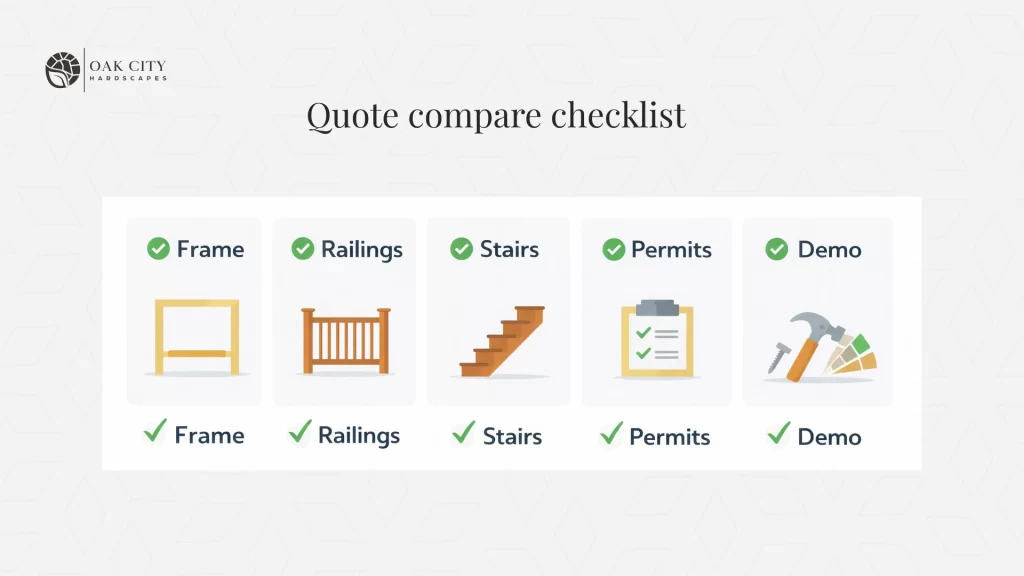
When you receive two quotes that look similar, ask these questions:
- Does the quote include demolition and haul-off if you are replacing an old deck?
- Is the substructure rebuild included, or assumed to be reused?
- What railing system is included, and how many linear feet?
- How many stairs, and what width?
- Are permits and inspections included, or separate?
- Are lighting, fascia, and finishing details included?
- What is the project timeline, and what could change it?
If you want a second opinion on a quote, it is often worth comparing the scope line by line, not just the total price.
Why Choose Oak City Hardscapes
Composite deck pricing is only for part numbers. The rest is planning, scope control, and build quality that prevents expensive “fixes” later.
Oak City Hardscapes helps you budget with clarity by walking through deck size, elevation, railing options, stair needs, and material tiers before finalizing the design. You get a detailed estimate tailored to your property and goals, not a guess based on national averages. Oak City also builds decks as a complete system, framing, decking, railings, stairs, and finishing details, so the final result looks intentional and performs long-term.
Frequently Asked Questions
What Is The Average Composite Decking Installation Cost?
Many national resources place installed composite deck costs in a broad range, commonly around $40 to $80 per square foot installed depending on materials and complexity.
What Is The Composite Deck Cost Per Square Foot In Raleigh?
Angi reports typical deck building costs in Raleigh often fall around $30 to $50 per square foot, and lists composite decking materials around $10 to $19 per square foot with labor often $13 to $30 per square foot, depending on the project.
Why Do Quotes Vary So Much For The Same Square Footage?
The biggest drivers are deck height, railing type, stair complexity, substructure condition, and custom design features. Labor and management can make up a large share of total cost.
Is Composite More Expensive Than Wood?
Upfront, usually yes. Many homeowners still choose composite because it reduces ongoing maintenance needs and holds its look longer, which can change the long-term cost picture.
Can I Save Money By Reusing My Existing Deck Frame?
Sometimes, but only if it is structurally sound and compatible with the new decking system. Trex notes that substructure condition can impact a sizable portion of the total cost.
How Can I Keep My Composite Deck Budget Under Control?
Keep the layout simple, choose railings early, limit complex stairs where possible, and finalize material selections before permits and ordering. A clear scope prevents change orders.
Conclusion
Composite decking can fit a wide range of budgets, but the final cost depends on the same handful of factors every time: size, height, substructure condition, railing and stairs, and the material tier you choose. If you want a price that matches your home and yard, the best next step is a site visit and a design-based estimate.
Key Takeaways:
- The composite deck cost per square foot is only useful if you know what it includes.
- Materials can be a smaller part of the total than most homeowners expect; labor and project complexity often drive the final number.
- Railings, stairs, and elevation are the fastest ways to move from an entry-level budget into premium pricing.
- The best way to avoid surprises is a detailed scope that lists substructure work, railings, stairs, permits, and finish details up front.