
A deck can look like a quick project when you see framing go up in a few days. That early progress is real, but it is also where most homeowners get caught off guard. The longest part of a deck build is often not the hammering and drilling. It is the planning, permitting, ordering, inspection windows, and scheduling that happen around the build.
If you are planning a season, a vacation, or a backyard event, this guide will walk you through a realistic deck-building timeline in the U.S., the factors that most affect it, and how to keep your project moving with fewer surprises.
The Short Answer: Typical U.S. Deck Build Timeline
Most decks have two different timelines.
On-site build time is the time the crew spends in your yard. For a straightforward deck, many contractors and industry resources describe building windows that typically take 1 to 3 weeks, depending on the scope.
The full project timeline is the real calendar, including design, permits, material lead times, inspections, and the contractor’s schedule. Many homeowners see total timelines described in the range of a few weeks, but it can be longer when approvals, specialty materials, or inspection availability add waiting time.
A practical planning range for many professional projects is four to ten weeks, and you should plan for more time if the deck is elevated, multi-level, roofed, or built with specialty rails and lighting.

Two Timelines To Plan For
Build Time
This is the physical construction sequence:
Footings, Framing, Decking, Rails, Stairs, and Cleanup.
Project Time
This includes everything required to start and finish correctly:
design choices, drawings, permits, ordering, delivery, inspections, and scheduling gaps.
Most frustration comes from mixing the two. If you only plan for build time, the project can feel slow even when it is moving normally.
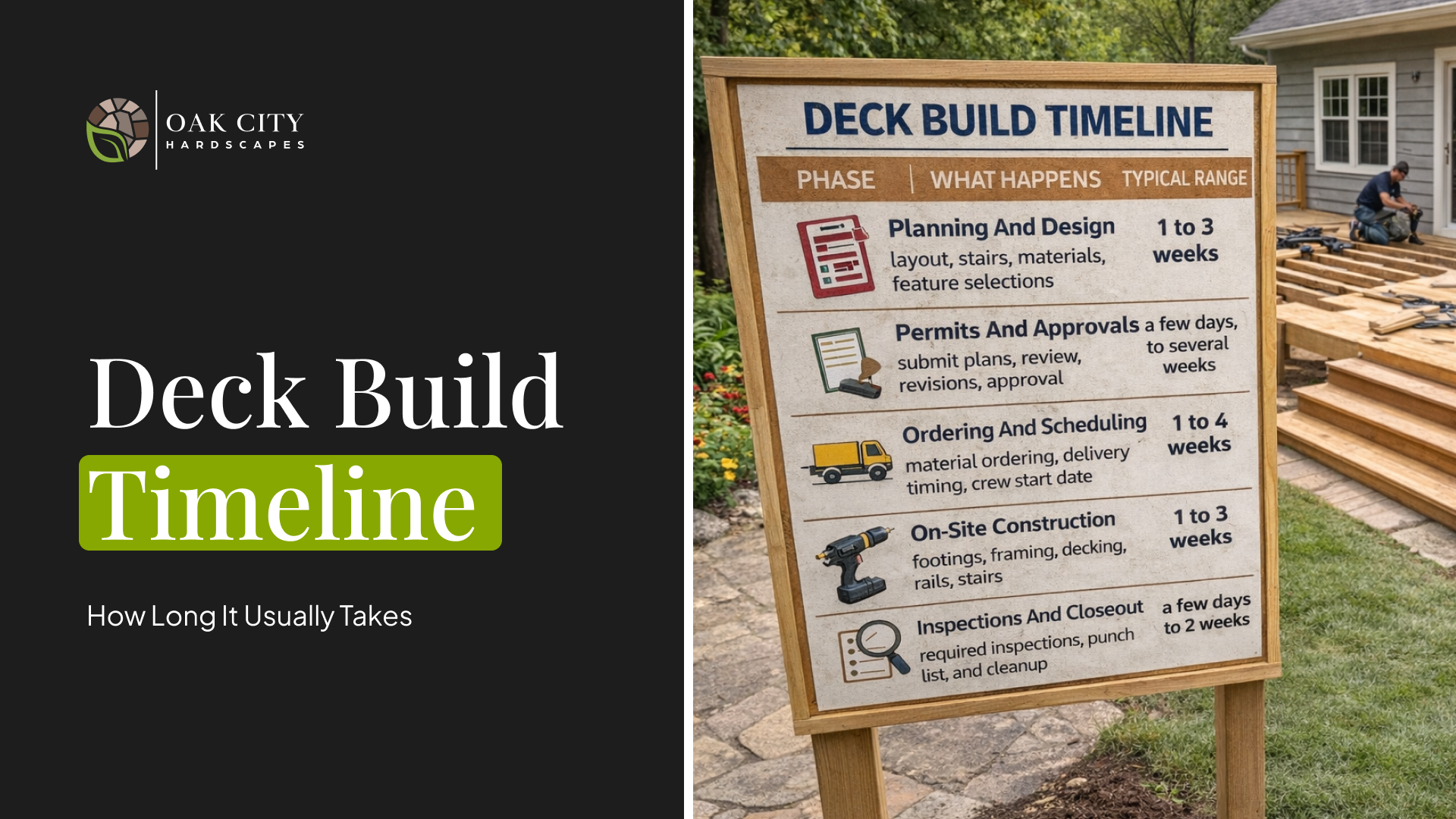
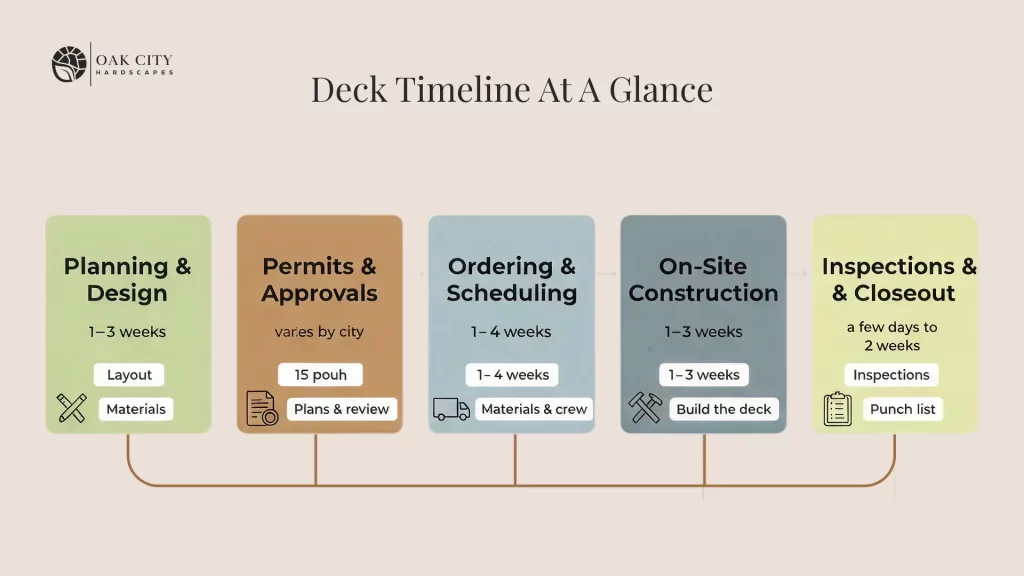
Deck Timeline At A Glance
| Phase | What Happens | Typical Range |
| Planning And Design | layout, stairs, materials, feature selections | 1 to 3 weeks |
| Permits And Approvals | submit plans, review, revisions, approval | a few days to several weeks |
| Ordering And Scheduling | material ordering, delivery timing, crew start date | 1 to 4 weeks |
| On-Site Construction | footings, framing, decking, rails, stairs | 1 to 3 weeks |
| Inspections And Closeout | required inspections, punch list, and cleanup | a few days to 2 weeks |
Permit timelines vary widely by jurisdiction. Some places can issue quickly for eligible applications, while others take longer, depending on workload and review cycles.
Phase-By-Phase Deck Build Timeline
Planning And Design
This phase determines how smooth everything will be later. The goal is to lock decisions that affect drawings, permitting, and lead times.
What happens here:
Deck size and shape, height, stair locations
Railing type and layout
Material choice and color
Features like lighting, built-in seating, privacy screens, or a cover
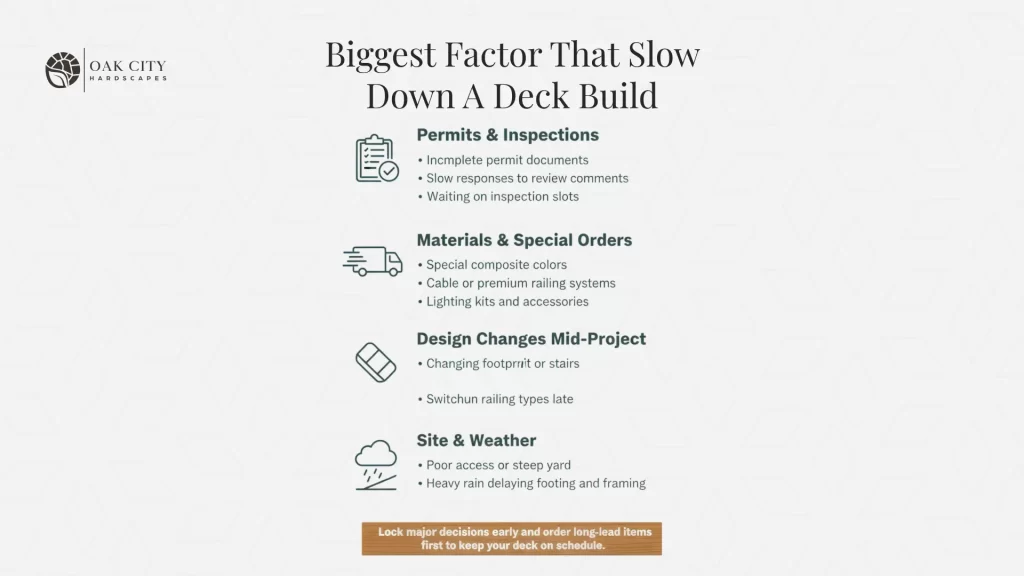
A common delay is changing big items at the last minute. If you change the footprint, stairs, or railing style after plans are drafted, you may need revised drawings and re-ordering.
Permits And Approvals
In most areas, permits are standard for deck building. Local rules differ, but permits are common for attached decks, elevated decks, and many replacements.
This phase typically includes:
Site plan and construction details
Submission to the local building department
Plan review comments and revisions if required
Fees and permit issuance
A helpful reality check is that some jurisdictions outline fast-track pathways for eligible deck applications, while standard reviews may still take multiple days or longer, depending on readiness and workload.
Ordering And Scheduling
- Even with a permit in hand, the build needs:
- Material delivery that matches your start date
- A slot on the contractor’s calendar
- Coordination for specialty items
This is where timelines often expand quietly, especially in peak season.
Construction
Most builds follow a consistent sequence:
- Site layout and prep
- Footings and posts
- Ledger and framing
- Decking installation
- Railings and stairs
- Final details and cleanup
Some resources break construction into framing, decking installation, and railing or stair work, each with its own time range depending on complexity.
Inspections And Closeout
Many areas require inspections at key points. A typical pattern is footing, framing, and final, with the exact list set by your local authority.
A common timeline issue is dead days between phases, when the crew is ready but must wait for the next inspection slot.
Permits And Inspections: The Biggest Wildcards
Why Permits Vary So Much
Permits vary because each city and county operates differently, and project complexity determines what reviewers need. Deck permitting guidance commonly notes that requirements and permitting thresholds differ by location.
Why Inspections Create Pause Points
Inspections are not just paperwork; they control what can be covered and what must remain visible for approval. Some jurisdictions also specify how far in advance inspections must be requested, which can affect pacing.
How To Reduce Dead Days
- Confirm inspection requirements early
- Schedule inspections as soon as the project is eligible
- Avoid covering framing or footings before approval
- Keep permit plans and documents accessible on site, if required locally
Material Lead Times: What To Order Early
Material lead times are not always about decking boards. It is often the finishing components that hold a schedule.
Items that commonly require more lead time:
- Specific composite colors and matching fascia
- Cable rail systems and specialty posts
- Lighting kits, transformers, and stair lighting
- Custom picture-frame borders and trim packages
For the fastest timeline, make selections early and order long-lead items as soon as the design is finalized.
What Changes A Deck Timeline Most
Deck Complexity
Single-level rectangles move faster than multi-level designs, curves, long stair runs, or built-ins.
Stairs And Railings
Stairs and railings are detail-heavy and inspection-sensitive. This is where small changes can create big delays.
Demolition And Hidden Repairs
Replacing an old deck can reveal ledger rot, drainage problems, or framing issues that need to be corrected before rebuilding.
Site Access And Yard Conditions
Tight access, steep slopes, or poor soil can slow down footing work and material handling.
Weather And Seasonal Demand
Peak season fills calendars. Planning several weeks or months ahead is often recommended so you are not competing for the same install windows.
Change Orders
Changes mid-build can trigger revised drawings, re-orders, and schedule reshuffling.
Sample Timelines For Common Deck Projects
Resurface Or Deck Renovation
Typical calendar: 3 to 6 weeks
This is often faster when the structure is solid, and only the surface, rails, or stairs are being upgraded.
New Ground-Level Deck
Typical calendar: 4 to 8 weeks
Design, permit review, and material ordering often shape the timeline more than the build days.
Elevated Or Multi-Level Deck With Upgrades
Typical calendar: 6 to 12 or more weeks
Engineering, permit cycles, specialty rails, and inspection pacing commonly stretch the schedule for complex builds.
How To Keep Your Deck Project On Schedule
Make The Big Decisions Early
Before permitting starts, lock in:
- Deck footprint and height
- Stair location and landings
- Railing type
- Decking material and color
- Lighting and electrical needs, if desired
Aim For A Complete Permit Package
Incomplete submissions create review cycles and rework. Many permit guides emphasize that clear plans reduce delays.
Order Long-Lead Items First
If you want a specific composite color or a premium rail system, plan accordingly for their availability. Specialty items can drive the schedule more than framing lumber.
Prep Your Property
- Clear access paths
- Move furniture, grills, and planters
- Mark irrigation and drainage lines
- Confirm material staging areas
Keep Communication Tight
- Agree on a timeline and decision deadlines
- Avoid last-minute changes
- Confirm who schedules inspections, and when
A Note From Oak City Hardscapes
At Oak City Hardscapes, a predictable timeline starts with a clear process. We focus on the parts that most often cause delays: early selections, permit readiness, material coordination, and a clean inspection sequence.
If you are planning a new deck and want a clear path from design to finished build, you can explore our deck services, view recent projects in our portfolio, and request a consultation to talk through scope and timing.
You may also find it helpful to review our guidance on choosing deck materials, since material selection can affect both timeline and long-term maintenance.
Frequently Asked Questions
How Long Does It Take To Build A Deck Once Construction Starts
For most standard projects, on-site construction typically falls within 1 to 3 weeks, depending on size, stairs and rails, weather, and inspection scheduling.
How Long Do Deck Permits Take
It depends on your local building department, workload, and the completeness of your application. Some jurisdictions can issue quickly for eligible applications, while others take longer based on review cycles.
What Causes The Biggest Timeline Delays
The most common delays are incomplete permit documents, slow responses to review comments, gaps in inspection scheduling, special-order materials, weather, and change orders.
Do Composite Decks Take Longer Than Wood Decks
Not always. Installation can be similar, but composite colors, fascia, and rail systems can introduce lead times. Wood may also require staining or sealing, depending on your plan.
When Should I Start Planning If I Want A Deck Ready For Summer
Start earlier than you think. Many planning resources recommend scheduling several weeks, and sometimes months, ahead, especially during peak season.
Conclusion And Key Takeaway
A deck timeline is easiest to understand when you separate the build days from the full project calendar. The build may move quickly once it starts, but permits, materials, and inspections often determine when you can begin and how smoothly the phases connect.
Key Takeaway:
- Plan for two timelines: the on-site build and the full project calendar.
- Permits and inspections vary widely, so check local requirements early and schedule inspections promptly.
- Finalize footprint, stairs, railing, and material selections early to prevent revisions and re-ordering.
- Order long-lead items first, especially specialty rails, lighting, and specific composite colors.
- Build in buffer time if you are targeting a season or event, because peak schedules fill up fast.