

If your deck boards are splintering, the railing has a little wobble, or you’re seeing dark spots that never fully dry, the question gets real fast.
How long do wooden decks last, and how do you know whether you’re looking at a simple refresh or the beginning of a bigger rebuild?
The honest answer is that the lifespan of a wood deck depends on the wood type, installation quality, exposure to moisture, and the consistency of your maintenance. Below you’ll find realistic lifespan ranges by wood type, a practical maintenance schedule to follow, and red flags indicating it’s time to repair or replace.
Wood Deck Lifespan At A Glance
Most mainstream resources land on a similar baseline: the average service life of a wood deck is often cited around 10 to 15 years, especially when maintenance is inconsistent.
That does not mean every deck fails at 15 years. A well-built, well-maintained wood deck can last longer. A deck that traps moisture, sits in deep shade, or goes years without protection can fail sooner.
A practical planning range to keep in mind:
- Average wood deck lifespan: 10 to 15 years.
- Carefully maintained wood decks: often closer to 10 to 20 years, depending on the wood and conditions.
Lifespan By Wood Type
The ranges below are meant for homeowners planning repairs, budgeting a rebuild, or comparing wood to composite. They assume proper construction basics, such as ventilation, proper drainage, and correct fasteners.
The “average” figures you see online often lump wood types together. That’s why this breakdown matters.
Typical lifespan ranges you’ll commonly see referenced:
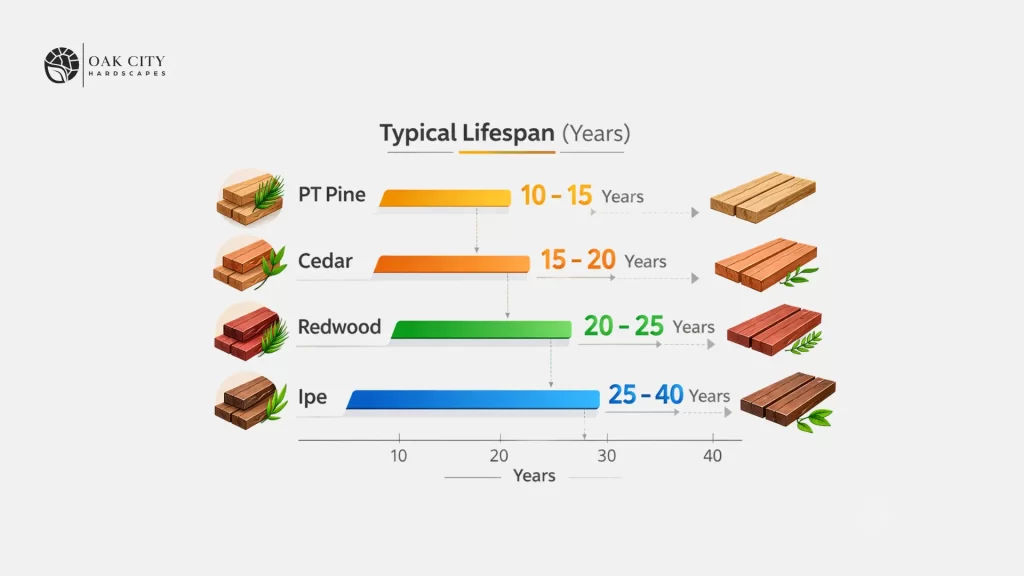
- Pressure-treated lumber: roughly 10 to 20 years in many homeowner guides, sometimes longer with strong maintenance and ideal conditions.
- Cedar: typically around 20 to 25 years when well-built and maintained.
- Redwood: often cited around 25 to 30 years with proper care.
- Tropical hardwoods like ipe are commonly cited as long-lasting materials, with real-world guidance sometimes reaching 40+ years.
Wood Deck Lifespan By Type
| Wood Type | Typical Lifespan Range | What It’s Good At | What It Needs Most |
| Pressure-Treated Pine | 10 to 20 years | Budget-friendly, widely available | Consistent sealing or staining, moisture control |
| Cedar | 20 to 25 years | Naturally rot-resistant, classic look | Gentle cleaning, regular protection to prevent weathering |
| Redwood | 25 to 30 years | Natural resistance, stable boards | Ongoing protection, avoid trapped moisture |
| Tropical Hardwoods (Ipe) | 40+ years | Extremely dense, durable | Optional oiling for color, still needs good airflow |
| Modified Wood (Accoya, etc.) | Often positioned as longer-lasting than typical softwoods | Stability, durability focus | Follow manufacturer guidance, maintain finish |
Pressure Treated Wood Deck Lifespan: What Changes The Number
When homeowners ask about the lifespan of pressure-treated wood decks, they’re usually trying to determine whether their deck is a 10-year or 20-year deck.
Pressure-treated pine deck boards are often cited in the 10 to 15 year range in inspection and manufacturer-adjacent guidance, but that number assumes average conditions and average maintenance.
Here’s what determines the lifespan.
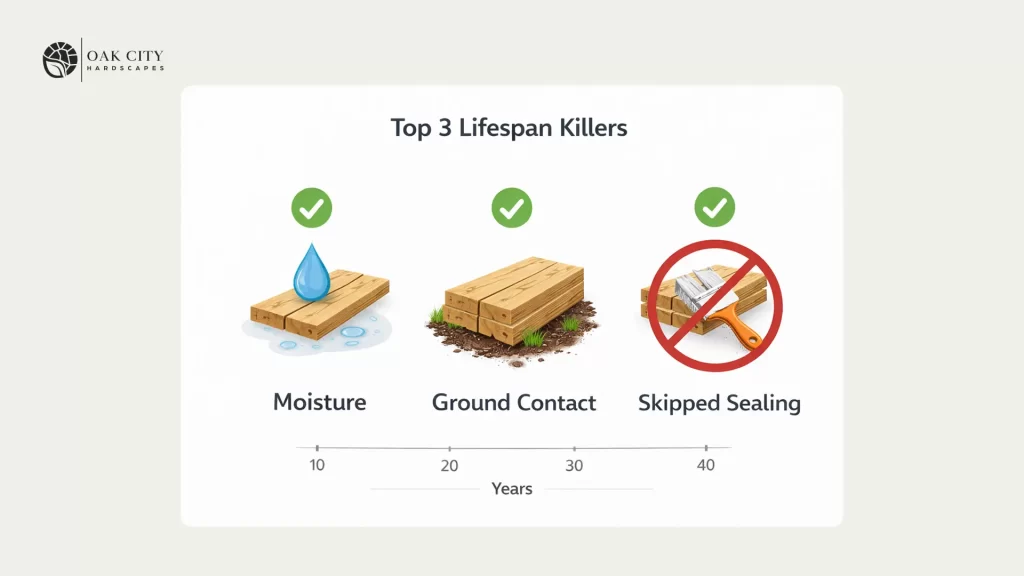
The Three Biggest Lifespan Killers
- Moisture That Can’t Escape
Standing water, planters that never move, damp leaves, and shaded areas that stay wet increase the risk of rot faster than most people expect. - Ground Contact Or Poor Clearance
Wood near soil stays damp longer, attracts insects, and decays faster. Good builds keep posts and framing out of constant wet contact. - Skipped Protection Cycles
Wood does not “fail suddenly” most of the time. It fails slowly after repeated wetting, drying, UV exposure, and neglected sealant or stain cycles.
The Maintenance Schedule That Adds Years
Wood decks reward consistency. You do not have to baby them, but you do need a rhythm.
Better Homes and Gardens emphasizes routine cleaning, repairs, and reapplying a protective sealant to extend deck life, and specifically notes resealing every 2 years for best results.
Many painting and deck-care resources also require staining every 2 to 3 years, depending on exposure and product type.
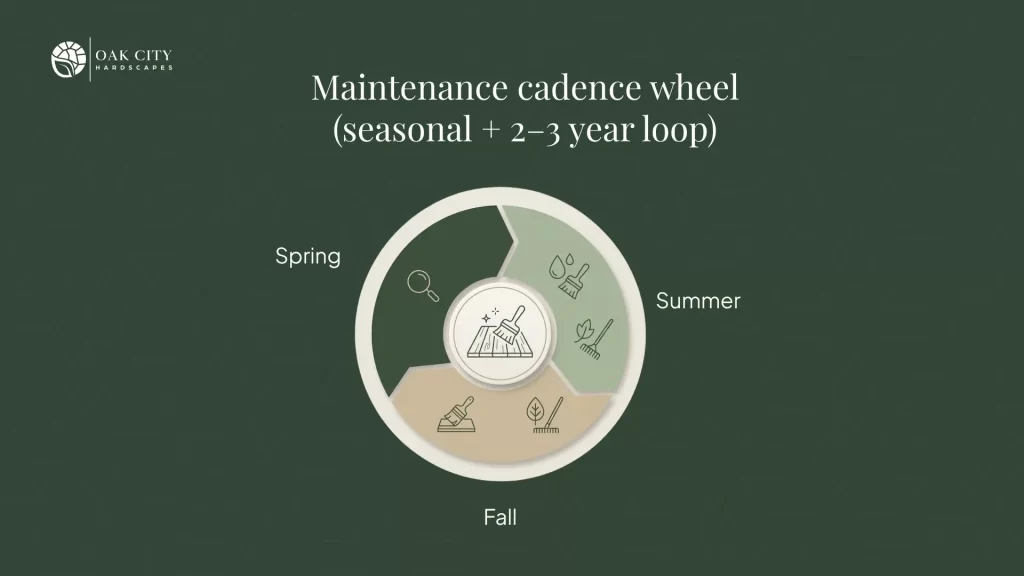
Maintenance Schedule For Raleigh And Similar Humid Climates
Spring (March To May)
- Sweep and rinse regularly during pollen season.
- Do a full inspection: loose boards, popped fasteners, soft spots, wobbly railings.
- Clean the deck at least once per year with a wood-safe cleaner.
Summer (June To August)
- Watch for cupping and splitting during heat, and address small issues early.
- Trim back vegetation to improve airflow and reduce trapped moisture.
Fall (September To November)
- Keep leaves off the deck; wet leaves hold moisture against the surface.
- Do a quick “water test.” If water soaks in instead of beading, it’s often time to recoat.
Every 2 To 3 Years (Typical)
- Reapply stain or sealant based on exposure and wear; more sun and rain usually mean more frequent reapplication.
Quick note on cleaning: Many homeowner resources caution that high pressure can damage wood fibers, especially on softer woods, so the cleaning method matters.
Common Failure Points That Shorten Deck Life
If you want a deck to last, focus on the parts people do not notice until something moves.
Ledger And Connection Points
The attachment between the deck and the home is a critical area for water management and long-term safety. If water gets behind flashing or into connection points, deterioration accelerates.
Stairs And High-Traffic Zones
Stair treads, landings, and the “path” from door to grill wear out faster. This is where you’ll first see cupping, splintering, and fastener movement.
Railings
Loose railings are a safety issue, not just a cosmetic one. Regularly test them with a firm push and tighten or repair early.
Repair Vs Replace: Signs Your Deck Is Near The End
Many decks do not need a full replacement. Some need new surface boards, hardware upgrades, and a refresh.
But if the structure is compromised, replacing boards alone can become a frustrating cycle.
Many inspection-focused sources note that wood decks commonly have an average service life of around 10 to 15 years, and that many older decks were built before modern best practices were common.
Consider a professional evaluation if you notice:
- Soft, punky wood, especially around posts, stair stringers, or ledger areas
- Sagging, bounce, or movement that wasn’t there before
- Wide cracks, severe splitting, or boards that no longer hold fasteners
- Persistent rot or fungal growth that returns quickly after cleaning
- Railings that shake or pull away under pressure
When It Makes Sense To Upgrade Instead Of Rebuilding Wood
Sometimes the best “wood deck plan” is not to rebuild wood.
If you love the look of wood but do not want the maintenance, composite can reduce most staining and sealing chores. Oak City Hardscapes breaks down wood vs composite decisions for Raleigh homeowners.
If you’re comparing all major options, this guide is also helpful:
What To Build Your Deck With: Wood Vs. Composite Vs. PVC
And if you want help assessing your current deck and planning the next one, you can explore Oak City’s deck services.
Frequently Asked Questions
How Long Do Wooden Decks Last On Average?
Many commonly cited sources place the average wood deck lifespan around 10 to 15 years, with longevity depending heavily on wood type, climate, and maintenance.
What Is A Realistic Pressure Treated Wood Deck Lifespan?
Inspection and manufacturer-adjacent guidance often cites pressure-treated pine deck boards around 10 to 15 years in average conditions, with potential for longer service when the deck is well built and consistently maintained.
How Often Should I Seal Or Stain A Wood Deck?
A common rule of thumb is every 2 to 3 years, sooner if the deck gets intense sun and rain, or if water no longer beads on the surface.
What Maintenance Makes The Biggest Difference?
Keeping the deck clean and dry, correcting small issues early, and staying consistent with staining or sealing cycles are the biggest drivers of long-term performance.
Can I Replace Just The Boards And Keep The Frame?
Sometimes, yes, but only if the framing and connections are structurally sound and properly detailed for drainage and airflow. A quick evaluation can tell you if resurfacing is smart or if rebuilding is safer.
Conclusion
A wood deck can be a great outdoor space, but its lifespan is not a mystery. Most decks land in the 10 to 15-year “average” range when maintenance is inconsistent, while better wood choices, better airflow, and a simple upkeep rhythm can push longevity higher.
If you want a clear plan for repair, resurfacing, or a full rebuild, Oak City Hardscapes can help you compare options and build a deck that fits your outdoor lifestyle.
Key Takeaway
- Most wood decks are commonly cited as lasting 10 to 15 years on average, with maintenance and conditions driving the final outcome.
- Pressure-treated decks last longer when moisture is managed, and protection cycles are consistent.
- Cedar and redwood often outlast basic softwoods when maintained, and hardwoods like ipe can be decades-long materials.
- A simple schedule, annual cleaning, regular inspection, and staining or sealing every 2 to 3 years, prevents most early failures.
- If you’re tired of upkeep, comparing wood vs composite can help you choose a longer-term path for your home.